


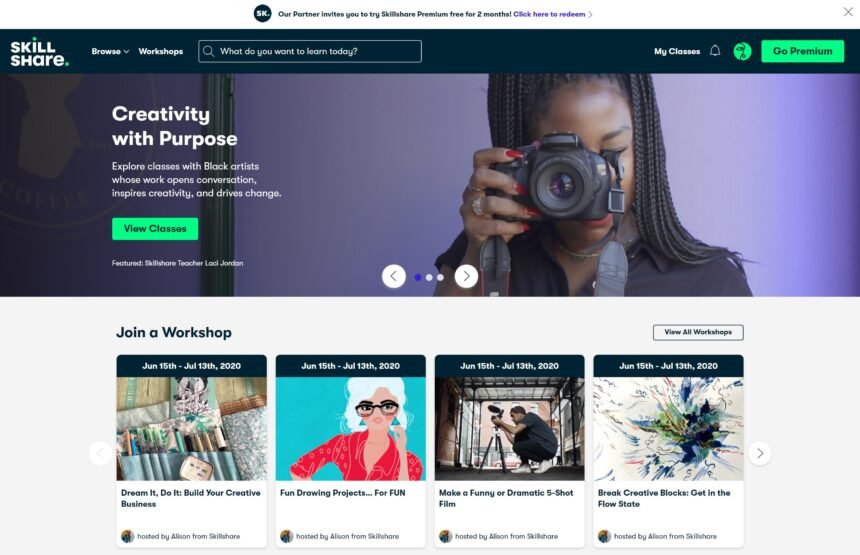
In today’s fast-moving digital world, learning new skills has become less about formal classrooms and more about flexible, on-demand experiences. One platform that has played a big role in this shift is Skillshare. Built around creativity, practicality, and community-driven learning, it has become a go-to destination for people who want to explore new skills without the pressure of traditional education systems.
At its core, Skillshare is simple: it connects curious learners with instructors who share real-world knowledge through short, structured video classes. Whether someone wants to learn design, photography, writing, business, or even productivity techniques, the platform offers a wide range of topics that feel both accessible and relevant.
You can explore the platform directly here: Skillshare
Learning That Feels Flexible, Not Formal
One of the biggest reasons Skillshare stands out is its flexibility. Unlike traditional courses that follow strict timelines, Skillshare classes are designed to be self-paced. This means learners can pause, resume, or revisit lessons whenever it suits them.
This approach works especially well for people balancing jobs, studies, or personal projects. Instead of committing to long academic schedules, users can focus on short bursts of learning that fit naturally into their day. A 10-minute lesson during lunch or a quick creative session in the evening is often enough to keep progress moving.
The platform’s structure encourages exploration rather than pressure. Instead of exams or rigid grading systems, learning is driven by projects. This makes the experience more hands-on and practical, helping users apply what they learn immediately.
A Creative Community at Its Core
What makes Skillshare feel different from many other learning platforms is its strong sense of community. Classes are often project-based, meaning students don’t just watch—they create. Whether it’s designing a logo, writing a short story, or editing a photo, learners are encouraged to share their work and receive feedback.
This interactive approach helps create a cycle of inspiration. People learn not only from instructors but also from other students who are going through the same process. It turns learning into something collaborative rather than isolated.
In many ways, Skillshare feels less like a formal education platform and more like a creative studio where ideas are constantly being shared, tested, and improved.
A Wide Range of Skills in One Place
Another strength of Skillshare is its diversity of content. The platform covers a broad spectrum of creative and professional topics. From illustration and animation to marketing, freelancing, and personal development, there is something for almost every interest.
This variety allows users to explore multiple paths without committing to a single direction too early. Someone might start with graphic design, then move into branding, and later explore entrepreneurship—all within the same platform.
It’s this freedom of exploration that appeals to both beginners and experienced professionals looking to expand their skill sets.

Learning Designed for the Real World
Skillshare focuses heavily on practical knowledge. Instead of abstract theory, most classes are taught by working professionals who share techniques they actually use in their careers. This real-world approach helps bridge the gap between learning and doing.
For example, a photography class might not just explain camera settings but also walk through editing workflows used by professionals. A writing class might focus on building a daily habit rather than just discussing literary theory. This makes the content immediately useful, especially for people trying to build creative careers or side projects.
Why Skillshare Continues to Grow
The popularity of Skillshare comes down to a simple idea: people want learning to feel natural, not overwhelming. By combining flexibility, creativity, and community interaction, the platform removes many of the barriers that traditionally make learning difficult.
It also reflects a broader cultural shift toward lifelong learning. Skills are no longer seen as something you finish in school—they are continuously developed over time. Platforms like Skillshare support this mindset by making education more accessible and less intimidating.
A Platform for Continuous Growth
In the end, Skillshare represents more than just an online learning website. It’s part of a new way people approach personal and professional growth. Whether someone is picking up a creative hobby, building freelance skills, or simply exploring new interests, it offers a space to learn at their own pace.
And in a world where adaptability matters more than ever, that kind of learning experience feels increasingly valuable.