By using this site, you agree to the Privacy Policy and Terms of Use.
Accept
Write MatrixWrite MatrixWrite Matrix
  • Home
  • Travel
    Travel
    Travel has been evolving rapidly across the tourism industry, making planning easier and more accessible. From online bookings to personalized itineraries, travel services are transforming…
    Show More
    Top News
    Solo Travel Around the World: Lessons, Fears, and Wins
    March 5, 2026
    Varanasi at Dawn: Witnessing a City That Never Stopped Believing in Time
    March 11, 2026
    Stop Booking Hotels. Start Booking Moments: Why Viator Is the Smartest Travel Decision You’ll Make This Year
    May 19, 2026
    Latest News
    The Rainforest That Predates the Amazon: Inside Borneo’s Danum Valley
    June 7, 2026
    The Scottish Island With No Roads, No Cars, and a Waiting List to Move There: Life on Eigg
    June 7, 2026
    Going to Vegas? Here’s How Smart Travellers Are Getting 50% Off the Strip’s Best Hotels
    May 21, 2026
    Stop Booking Hotels. Start Booking Moments: Why Viator Is the Smartest Travel Decision You’ll Make This Year
    May 19, 2026
  • News
    News
    The latest tech news about the world’s best (and sometimes worst) hardware, apps, and much more. From top companies like Google and Apple to tiny…
    Show More
    Top News
    U.S.–Venezuela Tensions After Maduro’s Capture: A Turning Point in Western Hemisphere
    March 5, 2026
    Molecular Upcycling: The Tech Turning Old Carbon Emissions into High-Performance Silk.
    April 21, 2026
    Frozen Mornings and Zero Visibility: India Battles Cold Wave and Dense Fog
    March 5, 2026
    Latest News
    The Arctic Is Open: Why the Melting Ice Cap Has Become the Most Contested Real Estate on Earth
    June 9, 2026
    Neuro-Privacy Laws: Why the EU is Drafting the First-Ever Ban on ‘Brain-Data Harvesting’ by Tech Firms.
    April 29, 2026
    The Cobalt Tightrope: Why the Congo is the New Sovereign Arbiter of the Green Revolution
    April 22, 2026
    Molecular Upcycling: The Tech Turning Old Carbon Emissions into High-Performance Silk.
    April 21, 2026
  • Fashion
    Fashion
    Get the latest Gadget News: Progress in digital tech from data, robotics, 3D printing & AI is at the core of Sandvik. Read about how…
    Show More
    Top News
    The Timeless Elegance of Ethnic Wear
    March 5, 2026
    The Tactile Kitchen: Why Manual Tools are Making a Comeback in the Age of Smart Appliances
    April 29, 2026
    The Evolution of Fashion Cycles in the Digital Age
    March 5, 2026
    Latest News
    Dopamine Dressing: The Science Behind Why Wearing Colour Actually Changes How You Feel
    June 9, 2026
    The Resale Throne: How Second-Hand Platforms Became the Fastest-Growing Fashion Brands on Earth
    June 2, 2026
    Worn Once, Worn Forever: The Science of Fabric Longevity That Fast Fashion Doesn’t Want You to Know
    June 1, 2026
    From Scroll to Sale in 4 Seconds: The Neurological War Being Fought Inside Your Shopping App
    May 16, 2026
  • Ecommerce
    Ecommerce
    E-commerce has been expanding at a rapid pace across global markets, reshaping how businesses operate online. From digital storefronts to seamless payment systems, e-commerce is…
    Show More
    Top News
    The Digital Village: How Niche Micro-Communities are Replacing Massive Social Networks. 
    April 20, 2026
    ESG Investing in 2026 Explained: Benefits, Risks, and Future Outlook
    March 5, 2026
    From Scroll to Sale in 4 Seconds: The Neurological War Being Fought Inside Your Shopping App
    May 16, 2026
    Latest News
    What If the World’s Greatest Minds Could Teach You Directly? MasterClass Makes That Possible.
    May 21, 2026
    Why Paying Full Price for Eyeglasses in 2026 Is a Choice, Not a Necessity — GlassesUSA Changes Everything
    May 21, 2026
    Adobe: The Company That Didn’t Just Build Tools — It Built the Language of Creativity
    May 19, 2026
    From Scroll to Sale in 4 Seconds: The Neurological War Being Fought Inside Your Shopping App
    May 16, 2026
  • Softwares
    Softwares
    Modern technology has become a total phenomenon for civilization, the defining force of a new social order in which efficiency is no longer an option…
    Show More
    Top News
    From LAN Parties to Discord Servers: How Gamers Connect
    March 5, 2026
    Cognitive Code: Designing Software That Adapts to the Way Your Brain Actually Works.
    April 18, 2026
    The Rise of Smart Homes: Convenience vs. Privacy
    March 5, 2026
    Latest News
    The Attention Merchants: How Big Tech Quietly Turned Your Focus Into the Most Traded Commodity on Earth
    June 3, 2026
    Your Customers Are Talking. Brevo Makes Sure You’re Always the One Replying.
    May 21, 2026
    Your Team Is Busy. But Is It Actually Getting Things Done? monday.com Has the Answer
    May 21, 2026
    Ghost Code: The Millions of Lines of Legacy Software Running the World’s Critical Systems — and Nobody Can Read It
    May 19, 2026
Search
  • Contact
  • Blog
  • Complaint
  • Advertise
© 2025 Write Matrix. All Rights Reserved | Crafted by Developer Mods
Reading: The Desert That Blooms: Inside Chile’s Atacama and the Once-in-a-Decade Wildflower Event That Draws Scientists and Wanderers Alike
Share
Notification Show More
Font ResizerAa
Write MatrixWrite Matrix
Font ResizerAa
  • News
  • Fashion
  • Softwares
  • Ecommerce
Search
  • Home
    • Home 1
    • Home 2
    • Home 3
    • Home 4
    • Home 5
  • Categories
    • News
    • Fashion
    • Softwares
    • Ecommerce
  • Bookmarks
  • More Foxiz
    • Sitemap
Follow US
  • Contact
  • Blog
  • Complaint
  • Advertise
© 2022 Foxiz News Network. Ruby Design Company. All Rights Reserved.
Write Matrix > Blog > Travel > The Desert That Blooms: Inside Chile’s Atacama and the Once-in-a-Decade Wildflower Event That Draws Scientists and Wanderers Alike
Travel

The Desert That Blooms: Inside Chile’s Atacama and the Once-in-a-Decade Wildflower Event That Draws Scientists and Wanderers Alike

Vivian Cao
Last updated: June 11, 2026 8:10 am
Vivian Cao
Share
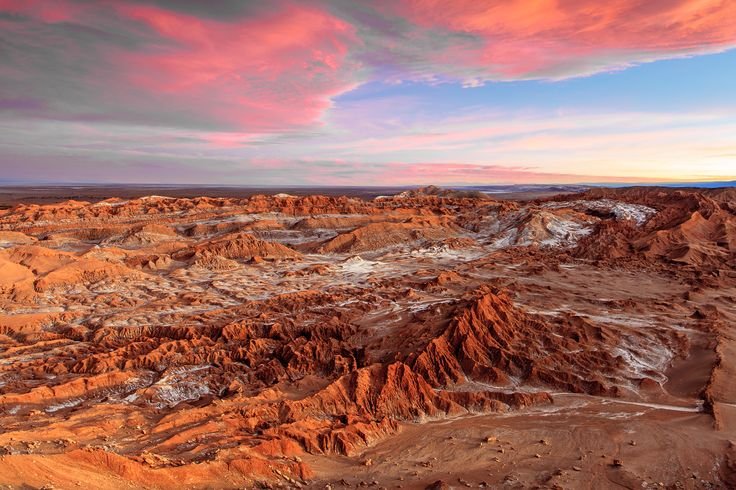
F31D2F Panoramic view of the Valley of the Moon and of the Valley of Death
SHARE

The Atacama Desert is, by most measures, the driest non-polar desert on earth. Some of its weather stations have never recorded rainfall. Parts of its surface are so inhospitable that NASA uses it as a testing ground for Mars rovers — the soil chemistry, the UV radiation levels, and the near-total absence of biological activity making it the closest terrestrial approximation of another planet that the agency has found.
Contents
The Desert at Its Most PermanentThe Science of the Impossible BloomWhat the Bloom Actually Looks LikeThe Communities That Live With the DesertHow to Go

And then, in certain years, after sufficient rain has fallen — rain that may not come again for a decade — the Atacama turns purple.

The desierto florido — the flowering desert — is one of the most extraordinary natural phenomena on earth. Across hundreds of kilometres of terrain that spent the previous years presenting nothing to the eye but rust-coloured stone and bleached salt, a carpet of wildflowers emerges with a speed and density that challenges the basic category of “desert” as a permanent description. Purple pata de guanaco. Pink suspiro de campo. White corona de fraile. Yellow añañuca. Flowers that have waited, as seeds in dry soil, sometimes for a decade or more, for precisely the right combination of moisture, temperature, and timing — and then bloom simultaneously, as though the desert remembered it had always been capable of this.

It is not a spectacle the world has organised itself around. It should be.

The Desert at Its Most Permanent

Before the flowers, the baseline. The Atacama occupies a strip of northern Chile approximately 1,000 kilometres long and 100 kilometres wide, running between the Pacific coast and the Andean foothills at elevations ranging from sea level to over 4,000 metres. It is cold at night in ways that visitors from warmer latitudes consistently underestimate, blazing at midday, and possessed of a quality of silence and light that has no equivalent in more populous landscapes.

The desert’s permanent attractions are themselves extraordinary. The Valle de la Luna — Valley of the Moon — is a landscape of salt formations, clay ridges, and wind-carved rock so alien that walking through it produces the specific cognitive dissonance of being somewhere that doesn’t look like Earth. The El Tatio geysers, at 4,320 metres above sea level, erupt at dawn in columns of steam against a sky that at that altitude is a shade of blue with no name in ordinary colour vocabulary. The Salar de Atacama — a vast salt flat reflecting the Andean peaks above it — hosts populations of flamingos feeding on the brine shrimp that thrive in its hypersaline waters, the pink of the birds against the white of the salt flat producing an image so improbable it registers, initially, as composite.

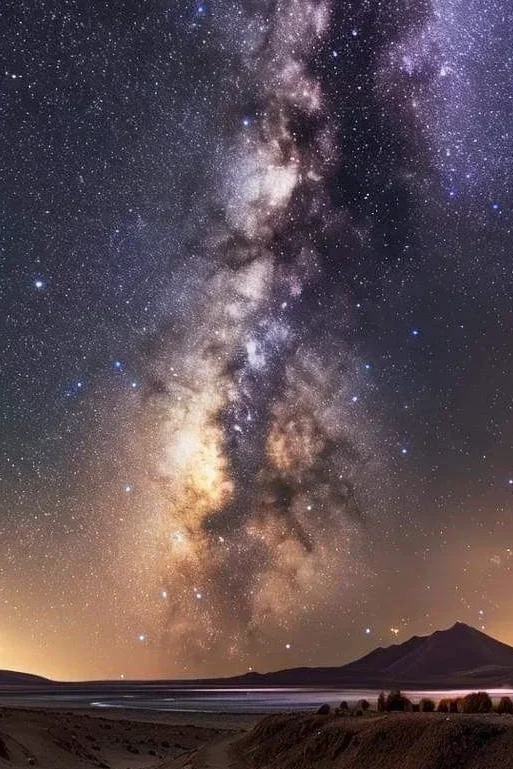
San Pedro de Atacama — the small adobe town that serves as the desert’s base — has developed a tourism infrastructure proportional to these attractions: good accommodation, competent tour operators, excellent stargazing (the Atacama’s atmospheric clarity makes it one of the premier astronomical observation sites in the world, with several major telescope installations operating in its vicinity). The permanent Atacama is already worth the journey. The flowering Atacama is something else entirely.


The Science of the Impossible Bloom

The desierto florido occurs when El Niño events bring anomalous rainfall to the Atacama — typically between August and November of years in which Pacific sea surface temperatures are significantly above normal. The rainfall triggers the germination of seeds that have lain dormant in the soil in a state of suspended biological potential, some for periods of up to 10 years.

The mechanism is not unique to the Atacama — other deserts bloom after exceptional rainfall — but the Atacama’s combination of extreme aridity, diverse seed bank accumulated over millennia, and the particular chemistry of its soils produces a flowering event of unusual density and colour diversity. Botanists have recorded over 200 species flowering during significant desierto florido events, many of them endemic to the Atacama and found nowhere else on earth.

The unpredictability is intrinsic. There is no calendar date for the desierto florido. There is no booking window. The Chilean meteorological service issues alerts when conditions appear favourable, and researchers and travellers who follow those alerts closely — and move quickly — may find themselves in the desert at the right moment. Those who arrive a week early see nothing but stone. Those who arrive a week late see the flowers already fading. The event is calibrated to the desert’s own timeline, not the traveller’s.

This is, for travellers accustomed to bookable experiences and guaranteed encounters, a disorienting proposition. It is also, for those who accept its terms, one of the most profound travel experiences available: being somewhere extraordinary at the specific moment it becomes something more.


What the Bloom Actually Looks Like

The photographs, when they circulate — as they do, intensely, in the years of significant blooms — tend toward the wide-angle: an endless carpet of purple extending to the horizon, a field of pink against ochre rock, a hillside covered in yellow that from a distance looks like a geological formation until the wind moves it.
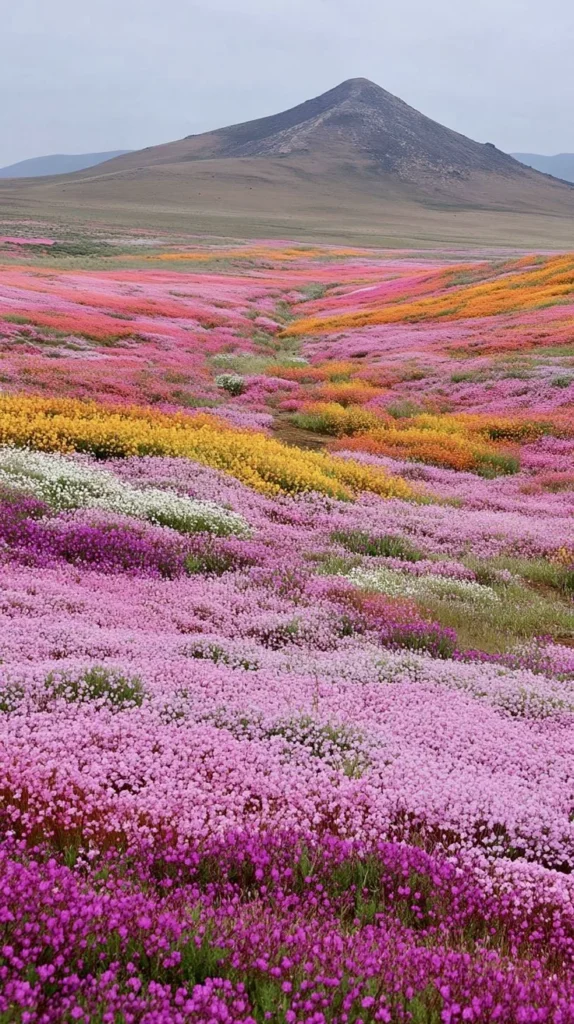
The experience at ground level is different. Walking through a blooming section of the Atacama means moving through flowers that reach to the knee, in air that carries a faint sweetness that the desert never otherwise produces, surrounded by insects — bees, butterflies, beetles — that have arrived in the same sudden abundance as the flowers, drawn by the same signal. The desert is not merely coloured. It is alive in the full ecological sense: pollination happening, seeds forming, the entire compressed drama of a growing season passing in weeks rather than months.

At night, the same sky that makes the Atacama one of the world’s great astronomical destinations acquires a different quality above the flowering ground — the stars unchanged, but the landscape below them no longer the arid surface that usually absorbs the light. It is, by any available measure, one of the most beautiful places on earth in the weeks it exists.


The Communities That Live With the Desert

The towns along the Atacama’s coastal edge — Copiapó, Vallenar, Huasco — have a relationship with the desierto florido that predates its international recognition by generations. For local communities, the bloom is not a tourism event but a cultural marker: a signal that the rains were sufficient, that the growing season may be kinder than usual, that the desert has kept a promise it makes irregularly and cannot be held to.

The indigenous Atacameño communities — the Lickanantay people, whose presence in the desert predates the Spanish arrival by thousands of years — hold the bloom within a cultural framework of desert stewardship and seasonal rhythm that no scientific account fully captures. The flowers have names in Kunza, the Lickanantay language, that exist independently of their botanical classifications. The blooming of the añañuca — a red-orange lily associated in local tradition with a young woman transformed by grief into a flower — carries a meaning that the scientific designation Rhodophiala bagnoldii cannot hold.


How to Go

The Atacama is reached via Calama Airport in northern Chile, served by regular domestic flights from Santiago. San Pedro de Atacama is 100 kilometres east of Calama — a journey of approximately one hour by road through desert landscape that functions as a gradual introduction to what follows.

For the permanent attractions — Valle de la Luna, El Tatio, the salt flat, the stargazing — any time of year is workable, with May to November offering the most stable conditions. For the desierto florido specifically, monitoring Chilean meteorological alerts from August onward in El Niño years is the most reliable approach. The Chilean tourism authority and botanical research institutions publish updates when blooming conditions develop — following them closely, and being prepared to travel within days of the alert, is the price the experience charges for admission.

It is a price worth paying without hesitation.

You Might Also Like

The Arctic Is Open: Why the Melting Ice Cap Has Become the Most Contested Real Estate on Earth

Dopamine Dressing: The Science Behind Why Wearing Colour Actually Changes How You Feel

The Rainforest That Predates the Amazon: Inside Borneo’s Danum Valley

The Scottish Island With No Roads, No Cars, and a Waiting List to Move There: Life on Eigg

The Attention Merchants: How Big Tech Quietly Turned Your Focus Into the Most Traded Commodity on Earth

TAGGED: beautiful, Explore, Global, Travel

Sign Up For Daily Newsletter

Be keep up! Get the latest breaking news delivered straight to your inbox.

By signing up, you agree to our Terms of Use and acknowledge the data practices in our Privacy Policy. You may unsubscribe at any time.
Share This Article
Facebook Twitter Copy Link Print
Share
Previous Article The Arctic Is Open: Why the Melting Ice Cap Has Become the Most Contested Real Estate on Earth
Leave a comment

Leave a Reply Cancel reply

Your email address will not be published. Required fields are marked *

Stay Connected

248.1kLike
69.1kFollow
134kPin
54.3kFollow
banner banner
Create an Amazing Newspaper
Discover thousands of options, easy to customize layouts, one-click to import demo and much more.
Learn More

Latest News

The Arctic Is Open: Why the Melting Ice Cap Has Become the Most Contested Real Estate on Earth
News
Dopamine Dressing: The Science Behind Why Wearing Colour Actually Changes How You Feel
Fashion
The Rainforest That Predates the Amazon: Inside Borneo’s Danum Valley
Travel
The Scottish Island With No Roads, No Cars, and a Waiting List to Move There: Life on Eigg
Travel

You Might also Like

Fashion

The Resale Throne: How Second-Hand Platforms Became the Fastest-Growing Fashion Brands on Earth

Vivian Cao Vivian Cao 9 Min Read
Fashion

Worn Once, Worn Forever: The Science of Fabric Longevity That Fast Fashion Doesn’t Want You to Know

Vivian Cao Vivian Cao 9 Min Read
Travel

Going to Vegas? Here’s How Smart Travellers Are Getting 50% Off the Strip’s Best Hotels

Vivian Cao Vivian Cao 7 Min Read
//

Writematrix can be positioned as a multi-niche content-driven website publisher. It can cover various categories, attracting diverse audiences and maximizing revenue streams.

Quick Link

  • Home
  • Travel
  • News
  • Fashion
  • Ecommerce
  • Softwares

Support

  • ADVERTISE
  • ONLINE BESTHot
  • CUSTOMER
  • SERVICES
  • SUBSCRIBE

Join our Community !!

Subscribe to our newsletter to get our newest articles instantly!

    Write MatrixWrite Matrix
    Follow US
    © 2025 Write Matrix. All Rights Reserved | Crafted by Developer Mods
    Join Us!

    Subscribe to our newsletter and never miss our latest news, podcasts etc..

    Zero spam, Unsubscribe at any time.
    Welcome Back!

    Sign in to your account

    Lost your password?