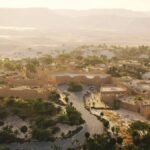


Borneo’s rainforests draw serious attention across Malaysia and Indonesia, orangutan sanctuaries, canopy lodges, well-worn ecotourism trails. Brunei, occupying a small sliver of the same island, rarely enters that conversation at all, despite protecting some of the least disturbed rainforest left anywhere on Borneo. Oil wealth kept Brunei’s forests largely untouched by the logging that reshaped much of the surrounding region, an accidental conservation outcome that’s left the country holding a genuine ecological asset it’s only recently started actively promoting to travellers.

Ulu Temburong: Borneo’s Green Jewel
The centerpiece is Ulu Temburong National Park, a roughly 50,000-hectare expanse of undisturbed lowland and mountain rainforest in Brunei’s isolated eastern district, separated from the rest of the country by a strip of Malaysian territory. Reaching it remains a genuine journey: visitors typically travel from the small town of Bangar by motorised longboat, speeding beneath low-hanging vines along the Temburong River for around forty-five minutes before reaching the park itself, a decades-long practice that makes the arrival feel less like a hotel check-in and more like an actual expedition. Independent exploration isn’t permitted, visits require booking through a registered operator at least a few days ahead so guides can arrange the necessary permits, a restriction that keeps visitor numbers genuinely low and the forest correspondingly undisturbed.
Above the Canopy, Below the Surface
The park’s signature experience is its aluminium canopy walkway, rising roughly sixty metres above the forest floor via a climb of more than a thousand steps, delivering sweeping views over a rainforest canopy that, crucially, has never been logged, a rarer sight in this part of Southeast Asia than most travellers realise. Wildlife encounters run from the charming to the genuinely unusual: gibbons foraging along the riverbanks at daybreak, hornbills moving through the upper canopy, and a stop at a natural forest pool where small catfish nibble dead skin from visitors’ feet, an impromptu, entirely wild version of the pedicures sold in spas elsewhere. A 2020 bridge connecting Temburong district directly to the rest of Brunei has cut travel time considerably, though the river approach into the park itself remains unchanged, and most operators still build the boat journey in as part of the experience rather than routing around it.
Beyond the Rainforest
Brunei’s capital, Bandar Seri Begawan, offers a genuinely striking contrast to the jungle: the gold-domed Sultan Omar Ali Saifuddien Mosque reflected in its own lagoon at golden hour, and Kampong Ayer, often described as the world’s largest stilted water village, home to communities that have lived on the Brunei River for over a thousand years, reachable by a short, inexpensive water taxi ride from the city centre. The Royal Regalia Museum offers insight into the world’s oldest continuously reigning monarchy under Sultan Hassanal Bolkiah, while Tasek Merimbun, an ASEAN Heritage site built around Brunei’s largest natural lake, provides another accessible slice of the country’s protected wetlands closer to the capital.

What Travellers Should Know Before Going
Brunei operates under Sharia law, implemented in stages through 2014 and expanded in 2019, and it’s worth being direct about what that means practically. The country is entirely dry, no bars, pubs, or licensed restaurants, though non-Muslim visitors may import a limited amount of alcohol for private consumption. Public displays of affection and certain behaviours legal elsewhere can constitute offences here, and modest dress is expected, particularly around religious sites. The 2019 legal changes drew significant international criticism specifically over provisions targeting homosexuality, and while Brunei announced a moratorium on capital punishment under the new code following that backlash, LGBTQ+ travellers should research current guidance carefully and make an informed decision before booking, rather than assume the moratorium resolves the underlying legal exposure. Beyond these considerations, Brunei is otherwise widely reported as very safe, with low violent crime and a generally welcoming approach to visitors.
Why It’s Worth Considering
Brunei isn’t trying to compete with Borneo’s more established ecotourism circuits in Sabah or Sarawak, and it doesn’t need to. What it offers instead is genuinely rare: a rainforest that largely escaped the logging pressure that reshaped so much of the island, protected less by deliberate environmental policy in its early decades than by the simple fact that oil wealth never required cutting it down. For travellers who do their homework on the country’s legal and cultural context and decide it’s a trip worth making, Ulu Temburong delivers something increasingly hard to find anywhere in Southeast Asia: a genuinely untouched forest, without the crowds.