

When most people picture African travel, their minds go straight to the golden savannahs of the Serengeti or the sweeping sand dunes of the Sahara. But way off the standard tourist trail lie two landscapes so visually striking and geographically isolated that they redefine what wild places can look like.
From a spiky, prehistoric desert forest in southern Madagascar to an emerald volcanic sanctuary floating off the West African coast, these two destinations prove that Earth still holds plenty of secrets for curious travelers.
Madagascar’s Spiny Forest: A Landscape So Prehistoric It Looks Unreal
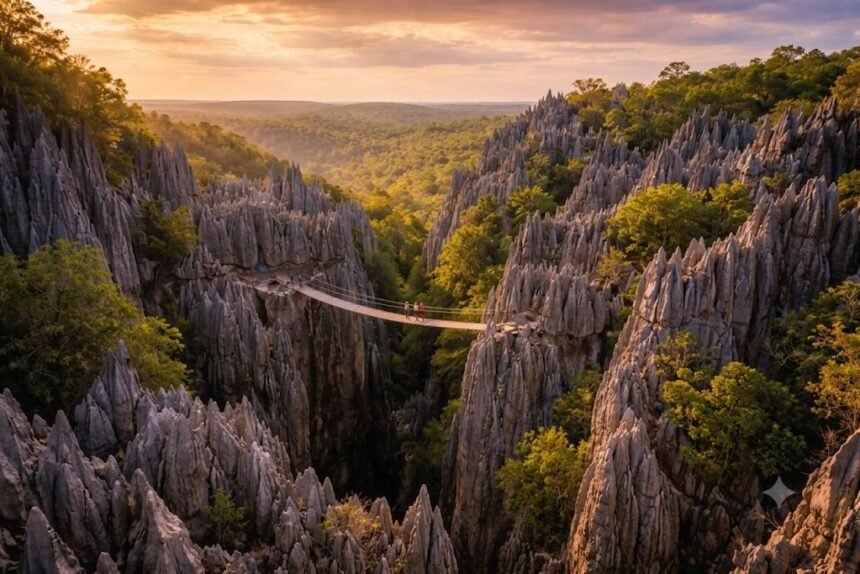
If you asked a concept artist to design a bizarre, alien plant world for a sci-fi film, they might end up drawing something that looks a lot like the Spiny Forest of southern Madagascar.
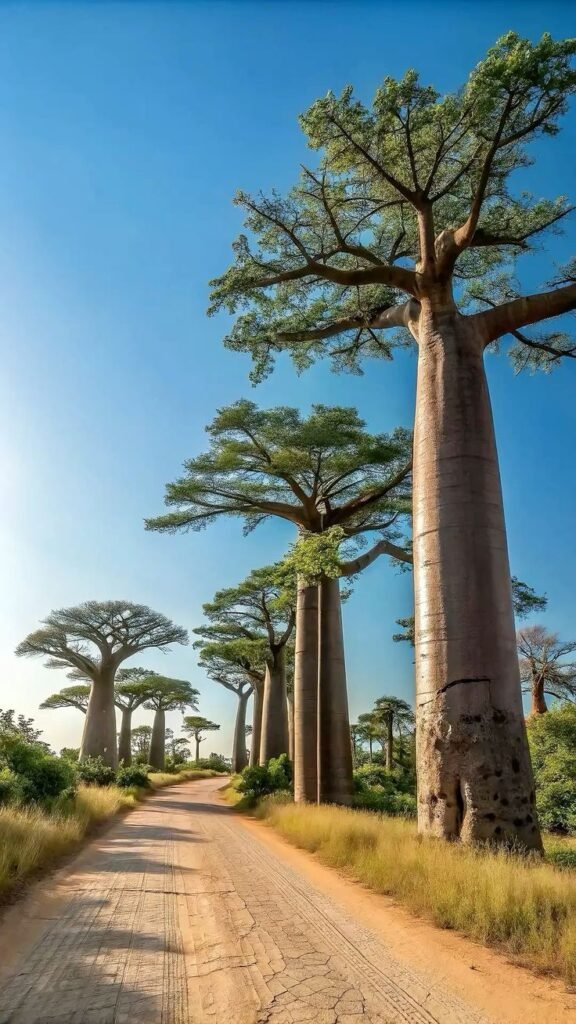
Spanning thousands of square miles across the island’s dry southwest, this ecosystem feels entirely detached from the rest of the planet. Over 90% of the plant species found here grow nowhere else on Earth. Instead of conventional trees with normal leaves, the landscape is choked with Alluaudia—lofty, pole-like succulents bristling with needle-sharp thorns—alongside swollen, water-storing baobabs and grotesque bottle trees that look like they were planted upside down.
How anything survives here is a marvel. The region goes months without a single drop of rain. Plants store water in thick, rubbery trunks, while white-furred sifaka lemurs have evolved to leap gracefully between razor-sharp, spiny branches without suffering a single scratch.
Walking through the Spiny Forest doesn’t feel like exploring a tropical island; it feels like stepping back millions of years into a completely forgotten era of natural history.
São Tomé and Príncipe: Africa’s Most Secretive Island Nation
If Madagascar’s Spiny Forest is an exercise in harsh, thorny survival, São Tomé and Príncipe is its lush, tropical polar opposite.
Floating in the Gulf of Guinea roughly 150 miles off the coast of Central Africa, this tiny twin-island nation is one of the quietest, least-visited countries on the continent. It receives only a tiny fraction of the tourists that head to places like the Seychelles or Mauritius—and that quiet solitude is precisely why it’s so special.
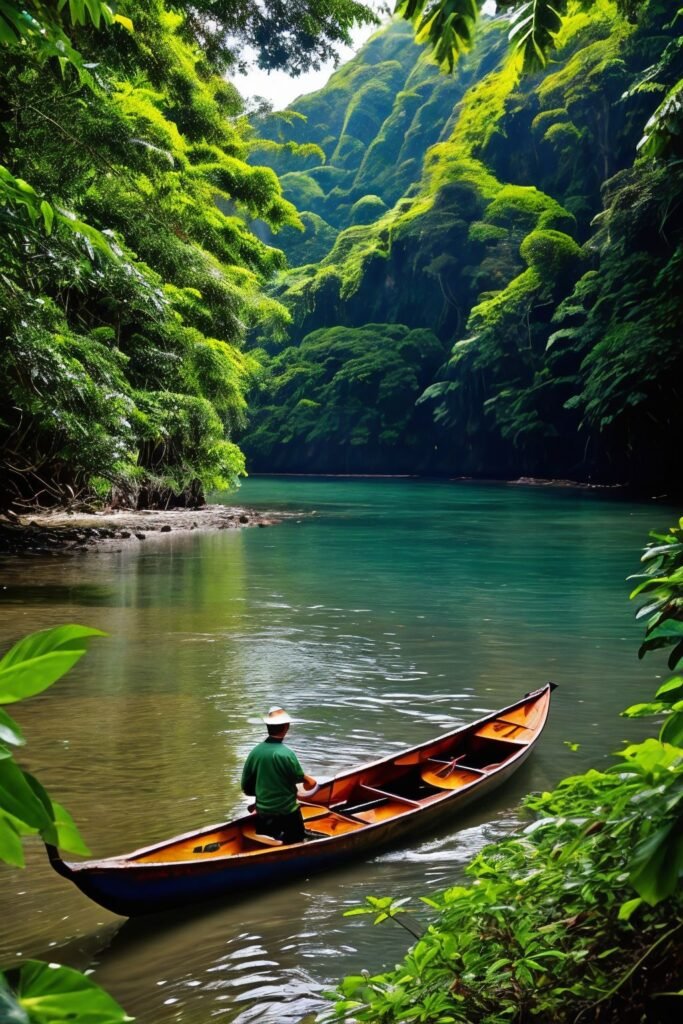
Formed by ancient volcanoes, the islands rise abruptly out of the Atlantic in a tangle of deep green rainforests, jagged rock towers, and completely deserted black-sand beaches. The island of Príncipe itself is a designated UNESCO Biosphere Reserve, packed with rare birds, nesting sea turtles, and plant life that rivals the Galápagos in its density.
Much of the island’s culture revolves around leve leve—a local philosophy that translates roughly to “take it easy.” Days here are spent exploring the crumbling, atmospheric ruins of old cacao plantations, diving through pristine underwater rock arches, and drinking incredible local chocolate in villages where time seems to have stood still for decades.
The Takeaway
Both of these places offer something that is becoming increasingly hard to find in modern travel: true, unvarnished mystery.
Whether you want to marvel at the strange, spike-covered plants of Madagascar or wander through a misty, forgotten island forest in the Atlantic, stepping off the beaten path will remind you just how wild and unpredictable our planet still is.