


If your skincare routine has hit a plateau, K-beauty has introduced an ingredient that is completely reshaping how we think about home exfoliation and serum delivery: spicules. Often dubbed “liquid microneedling” or “microneedling in a bottle,” spicules have quickly turned into one of the most talked-about skincare innovations of the year.

Unlike traditional acid exfoliants (like AHAs or BHAs) or abrasive physical face scrubs, spicules take a very different approach to skin cell turnover and product absorption.
Here is a straightforward look at what spicules actually are, how they work on your skin, and whether they deserve a permanent spot on your bathroom counter.
What Are Spicules?
Spicules are microscopic, needle-like structures derived from natural marine sponges—specifically freshwater silica sponges. Once purified, processed, and formulated into serums, ampoules, or night creams, these tiny bio-needles remain completely invisible to the naked eye.
When you massage a spicule-infused product onto your face, these micro-structures act as temporary physical stimulators. They gently embed themselves into the uppermost layer of the epidermis (stratum corneum), creating microscopic, temporary channels that jumpstart your skin’s natural repair cycle without requiring an expensive or invasive in-clinic procedure.
The Dual-Action Mechanism: How They Actually Work
Spicules go beyond standard topical exfoliants by working through two distinct actions:
- Deeper Product Delivery: Your skin’s natural barrier is designed to keep things out, which means standard serums often just sit on the surface. The micro-channels created by spicules stay open for roughly 24 to 48 hours, allowing accompanying active ingredients—such as hyaluronic acid, niacinamide, PDRN, or peptides—to absorb significantly deeper than they normally would.
- Accelerated Cell Renewal: The physical presence of these tiny silica needles tricks the skin into sensing a mild surface disruption. In response, your body accelerates its natural cell turnover, shedding dead surface cells and generating fresh, smooth skin underneath. The spicules themselves do not dissolve inside you; instead, they naturally slough off alongside your dead skin over a few days.
Real Benefits for Texture and Tone
Adding spicules to your nighttime routine can help target several persistent skin concerns:
- Refined Skin Texture: Mechanical micro-exfoliation smooths out tiny surface bumps, dry patches, and rough areas far faster than surface-level serums.
- Tighter-Looking Pores: As cell turnover speeds up and trapped debris is cleared out, enlarged pores appear noticeably smaller and less visible.
- Enhanced Skin Radiance: By improving active ingredient penetration and removing dull top-layer buildup, your skin reflects light more evenly, giving you that coveted “glass skin” glow.
- Faster Fading of Post-Acne Marks: Accelerated turnover helps gradually fade stubborn post-acne dark spots and mild hyperpigmentation when paired with brightening actives.
What to Expect and How to Apply Safely
Because spicules physically lodge into the outer layer of your skin, introducing them requires a little extra care:
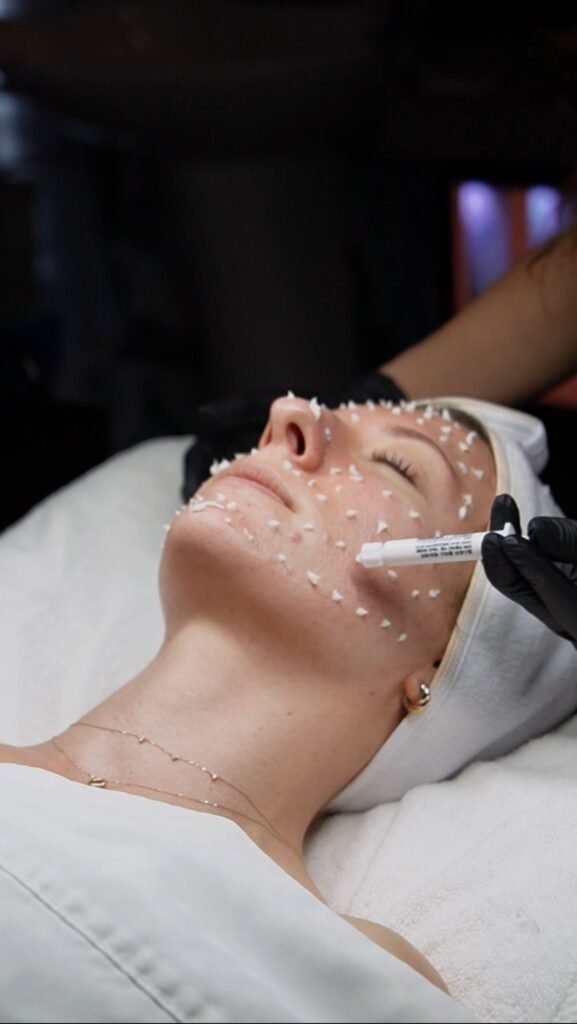
- Embrace the Prickle: You will feel a distinct tingling or prickling sensation when you apply the serum, and even when you gently touch your face hours later. That isn’t an allergic reaction—it just means the spicules are active in your outer skin layer.
- Start Low and Slow: Spicule products typically come in different strength tiers (such as 50, 100, 300, or 700). Beginners should always start with a lower concentration once or twice a week at night.
- Focus on Barrier Support: Always follow your spicule application with rich, soothing ingredients like Centella Asiatica (Cica), ceramides, or panthenol to lock in moisture.
- Pause Strong Actives: Avoid combining spicules with strong chemical acids (AHAs/BHAs), high-percentage retinoids, or harsh physical scrubs on the same night.
Note: If you are currently dealing with active eczema, rosacea, severe inflammatory acne, or a damaged skin barrier, hold off on spicule treatments until your skin fully heals.