
By using this site, you agree to the Privacy Policy and Terms of Use.
Accept
Write MatrixWrite MatrixWrite Matrix
  • Home
  • Travel
    Travel
    Travel has been evolving rapidly across the tourism industry, making planning easier and more accessible. From online bookings to personalized itineraries, travel services are transforming…
    Show More
    Top News
    Solo Travel Around the World: Lessons, Fears, and Wins
    March 5, 2026
    The Tonga Nobody Visits: Polynesia’s Last Kingdom and the Humpback Whales That Arrive Every July
    July 17, 2026
    Varanasi at Dawn: Witnessing a City That Never Stopped Believing in Time
    March 11, 2026
    Latest News
    Tanzania’s New Overwater Suites Are Bringing the Maldives Model to East Africa
    October 21, 2026
    The Chedi Wadi Safar: Inside Saudi Arabia’s Desert Valley Luxury Debut
    October 21, 2026
    South America Is Calling: Why LATAM Makes Exploring the Continent Feel Like One Big Journey
    September 26, 2026
    Travel Is No Longer Just About Where You Go — It’s About What You Do There
    September 26, 2026
  • News
    News
    The latest tech news about the world’s best (and sometimes worst) hardware, apps, and much more. From top companies like Google and Apple to tiny…
    Show More
    Top News
    U.S.–Venezuela Tensions After Maduro’s Capture: A Turning Point in Western Hemisphere
    March 5, 2026
    Molecular Upcycling: The Tech Turning Old Carbon Emissions into High-Performance Silk.
    April 21, 2026
    Frozen Mornings and Zero Visibility: India Battles Cold Wave and Dense Fog
    March 5, 2026
    Latest News
    The Global Chip Shortage Is Back — Here’s What’s Actually Driving It This Time
    September 21, 2026
    Ukraine Endures 72 Hours of Drone Strikes: Inside the Latest Escalation
    September 7, 2026
    Ukraine’s Drone Barrage: What the Latest Escalation Signals for the War’s Next Phase
    August 31, 2026
    Iceland Votes No: Inside the EU Referendum Result Few Saw Coming
    August 31, 2026
  • Fashion
    Fashion
    Get the latest Gadget News: Progress in digital tech from data, robotics, 3D printing & AI is at the core of Sandvik. Read about how…
    Show More
    Top News
    Men’s Skincare Is the Fastest-Growing Beauty Segment — Why Now?
    July 21, 2026
    The Timeless Elegance of Ethnic Wear
    March 5, 2026
    The Trench Coat Gets a Refresh: Navy, Chocolate, and Leather Take Over From Beige
    September 21, 2026
    Latest News
    The Basque Waistline Returns: Why This Dress Detail Is Suddenly Everywhere
    October 21, 2026
    The Suit Skirt Is Officially the Chicest Way to Wear Tailoring This Year
    October 21, 2026
    K-Beauty Spicules Are 2026’s Buzziest Exfoliation Ingredient: Here’s What They Do
    October 21, 2026
    The Trench Coat Gets a Refresh: Navy, Chocolate, and Leather Take Over From Beige
    September 21, 2026
  • Ecommerce
    Ecommerce
    E-commerce has been expanding at a rapid pace across global markets, reshaping how businesses operate online. From digital storefronts to seamless payment systems, e-commerce is…
    Show More
    Top News
    The Gift That Doesn’t End Up in a Drawer: Why Xteink Is the Thoughtful Gift Readers Actually Want
    October 5, 2026
    The Digital Village: How Niche Micro-Communities are Replacing Massive Social Networks. 
    April 20, 2026
    Nestlé Shifts Its Strategy as Coffee, Petcare and Emerging Markets Take Centre Stage
    September 21, 2026
    Latest News
    The Gift That Doesn’t End Up in a Drawer: Why Xteink Is the Thoughtful Gift Readers Actually Want
    October 5, 2026
    Why Shopify Still Outpaces Every Other Way to Start an Online Store
    October 5, 2026
    Where Does the Workday Go? Why Smarter Time Tracking Is Changing Modern Work
    September 29, 2026
    The New Way to Tackle Yard Work: Why Cordless Outdoor Tools Are Changing Home Maintenance
    October 1, 2026
  • Softwares
    Softwares
    Modern technology has become a total phenomenon for civilization, the defining force of a new social order in which efficiency is no longer an option…
    Show More
    Top News
    From Blank Page to Finished Idea: How Gamma Is Changing the Way We Create
    September 28, 2026
    From LAN Parties to Discord Servers: How Gamers Connect
    March 5, 2026
    Cognitive Code: Designing Software That Adapts to the Way Your Brain Actually Works.
    April 18, 2026
    Latest News
    The “SaaS-Pocalypse” Myth: Why AI Isn’t Killing Commercial Software
    October 21, 2026
    Where Does the Workday Go? Why Smarter Time Tracking Is Changing Modern Work
    September 29, 2026
    From GTA 6 to New Nintendo Adventures, Gamers Have a Huge Autumn Ahead
    September 21, 2026
    From Blank Page to Finished Idea: How Gamma Is Changing the Way We Create
    September 28, 2026
Search
  • Contact
  • Privacy Policy
  • Terms & Conditions
© 2025 Write Matrix. All Rights Reserved | Crafted by Developer Mods
Reading: Dopamine Dressing: The Science Behind Why Wearing Colour Actually Changes How You Feel
Share
Notification Show More
Font ResizerAa
Write MatrixWrite Matrix
Font ResizerAa
  • News
  • Fashion
  • Softwares
  • Ecommerce
Search
  • Home
    • Home 1
    • Home 2
    • Home 3
    • Home 4
    • Home 5
  • Categories
    • News
    • Fashion
    • Softwares
    • Ecommerce
  • Bookmarks
  • More Foxiz
    • Sitemap
Follow US
  • Contact
  • Privacy Policy
  • Terms & Conditions
© 2022 Foxiz News Network. Ruby Design Company. All Rights Reserved.
Write Matrix > Blog > Fashion > Dopamine Dressing: The Science Behind Why Wearing Colour Actually Changes How You Feel
Fashion

Dopamine Dressing: The Science Behind Why Wearing Colour Actually Changes How You Feel

Vivian Cao
Last updated: June 9, 2026 10:28 am
Vivian Cao
Share
SHARE

There is a yellow dress hanging in a wardrobe somewhere that its owner reaches for on specific days. Not because it is the most practical choice, not because it matches anything in particular, but because something happens when it is worn — a subtle but unmistakable shift in posture, in energy, in the quality of the day’s first few hours. She cannot fully explain it. She does not need to. The dress already knows what it is doing.

Contents
What Dopamine Dressing Actually MeansWhat the Research Shows — By ColourThe Enclothed Cognition EffectHow the Fashion Industry Is Catching UpDressing With Intention

This is not sentimentality. It is neuroscience. And the science behind why colour affects mood — why the clothes we choose in the morning have a measurable influence on how we feel, think, and perform through the day — is more rigorous, and more interesting, than the fashion industry has traditionally given itself credit for.

What Dopamine Dressing Actually Means

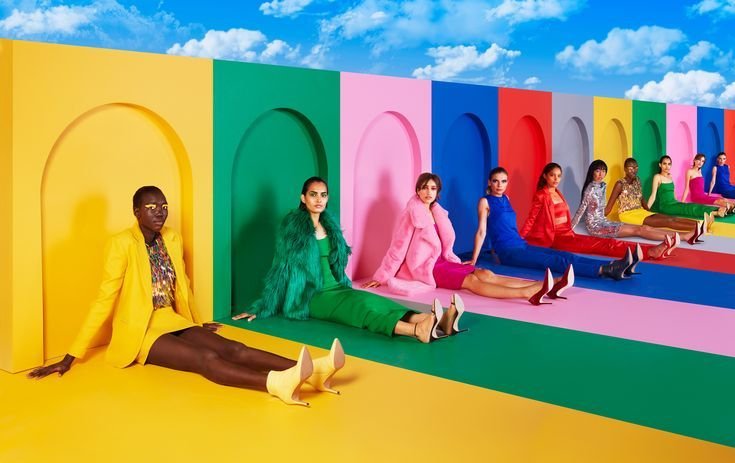
The term “dopamine dressing” entered the fashion vocabulary around 2020 — a pandemic-era phenomenon where people, stripped of external social occasions, began dressing for internal reasons instead. For the feeling it produced rather than the impression it made. The bright colours, the bold prints, the pieces that had been saved for “special occasions” that never seemed to arrive — they came out of the wardrobe and into daily life because daily life, under lockdown, needed something.

The name is slightly misleading, in the way that popular neuroscience terms often are. Wearing a red dress does not produce a dopamine spike in the clinical sense. What colour does — and what the research consistently demonstrates — is activate the brain’s emotional processing centres in ways that are measurable, reproducible, and surprisingly consistent across cultures and individuals.

Colour is processed in the brain’s visual cortex and immediately routed to the limbic system — the same system responsible for emotional response, memory, and motivation. This routing happens before conscious thought. Before you have decided how you feel about the yellow dress, your limbic system has already responded to it. The feeling arrives before the reasoning. The science simply confirms what the body already knew.


What the Research Shows — By Colour

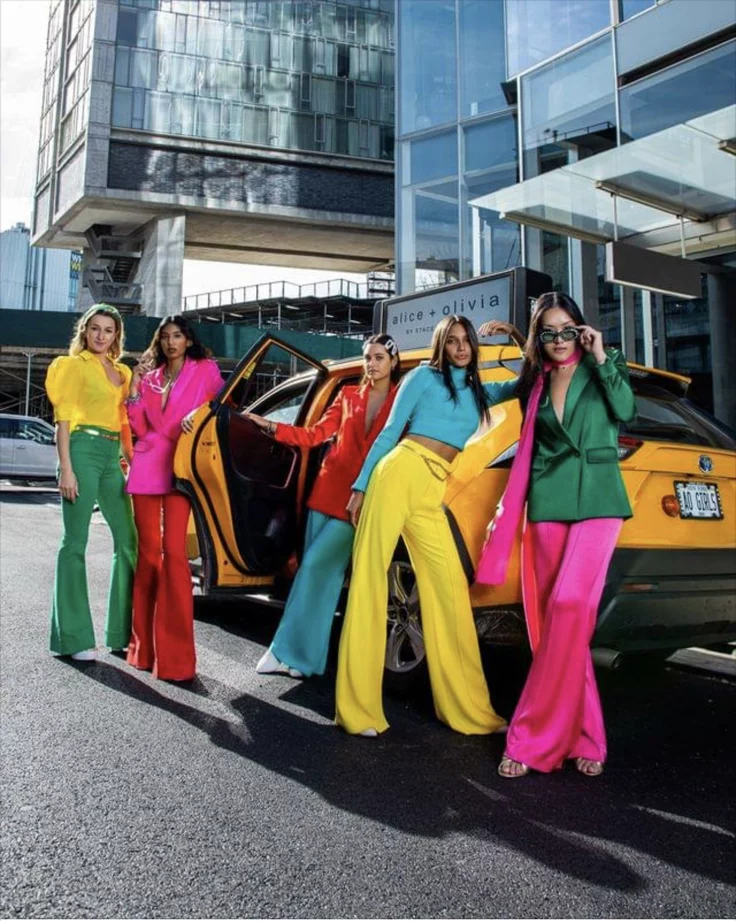
Red activates the sympathetic nervous system — the body’s arousal and alertness mechanism. Studies consistently show that wearing red increases perceived confidence in both the wearer and those observing them. Athletes competing in red uniforms have been shown to win at statistically higher rates in evenly matched competitions. The effect is not conscious or cultural — it operates below the level of deliberate perception.

Yellow activates the brain’s serotonin pathways — the neurotransmitter system associated with mood regulation, optimism, and social openness. Research from the University of Amsterdam found that yellow environments measurably increased self-reported positive mood within minutes of exposure. Wearing yellow produces a milder but analogous effect — the colour in your peripheral vision throughout the day functions as a gentle, continuous mood signal.
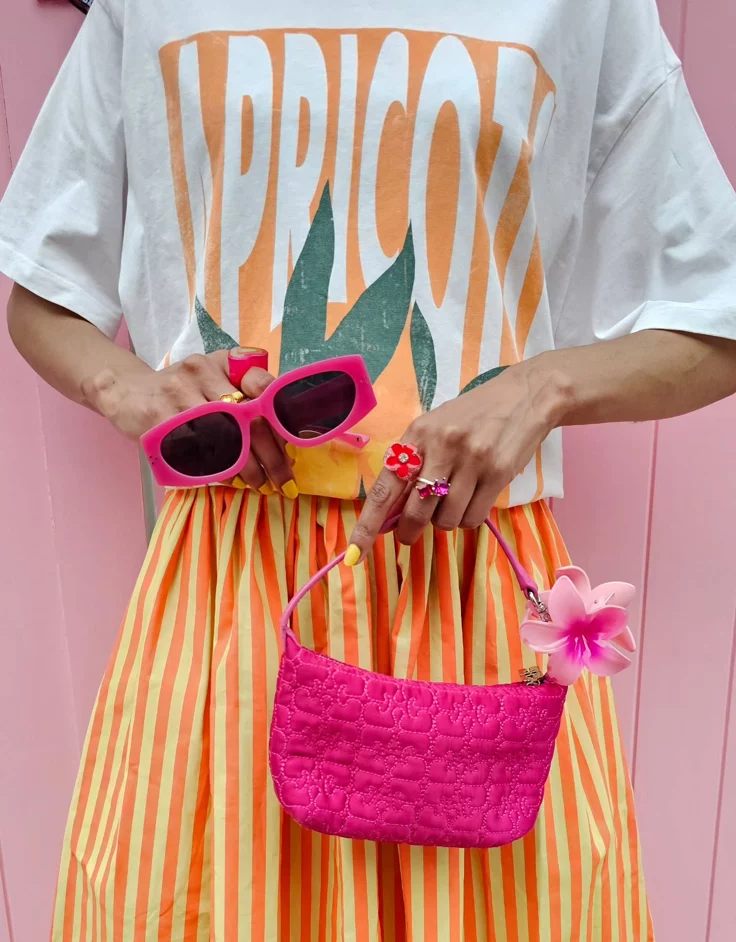
Blue — particularly mid-range blues — activates the parasympathetic nervous system, the body’s rest and recovery mechanism. Blood pressure decreases measurably in blue environments. Cortisol — the primary stress hormone — drops. People in blue rooms perform better on tasks requiring careful, sustained attention. Wearing blue on days requiring focus and composure is not a stylistic choice. It is a neurological strategy.

Green triggers the brain’s associations with safety, restoration, and natural environments — an evolutionary inheritance from the deep human past in which green meant vegetation, water, and the absence of immediate threat. Hospital scrubs are green for this reason. The calming effect is not cultural. It is wired.

Black is its own category — a colour that functions as the absence of colour and activates the brain’s social evaluation circuitry differently from chromatic choices. Research suggests that wearing black reduces the wearer’s social visibility in a specific way — not rendering them invisible, but signalling a deliberate withdrawal from colour’s emotional broadcasting. For many people on difficult days, black is not pessimism. It is protection.


The Enclothed Cognition Effect

The science of how clothing affects the mind extends beyond colour into what psychologists call enclothed cognition — a term coined by researchers Hajo Adam and Adam Galinsky in a landmark 2012 study that demonstrated, with rigorous experimental methodology, that the clothes we wear alter our cognitive performance in measurable ways.

In their original study, participants who wore a white lab coat described as belonging to a doctor performed significantly better on tasks requiring sustained attention than participants wearing identical coats described as painter’s smocks, or wearing no coat at all. The garment was identical. The meaning assigned to it changed cognitive output.

The implications for everyday dressing are considerable. The suit that makes you feel more authoritative is not making you feel that way arbitrarily. The comfortable, formless clothes that make concentration difficult are not coincidentally associated with low focus. The garment communicates to the brain — through the meaning the wearer assigns to it, through the physical sensation of wearing it, and through the colour signals it sends to the limbic system — a set of instructions about what kind of cognitive and emotional state is appropriate.

You are, in a measurable sense, dressing your brain as much as your body.


How the Fashion Industry Is Catching Up

The dopamine dressing phenomenon has pushed colour from the periphery to the centre of fashion’s commercial and creative conversation. Brands that built their identity on neutral, quiet palettes — the beige, the grey, the off-white minimalism of the previous decade — are quietly, selectively introducing colour, not as trend-following but as response to documented consumer demand for mood-enhancing dressing.
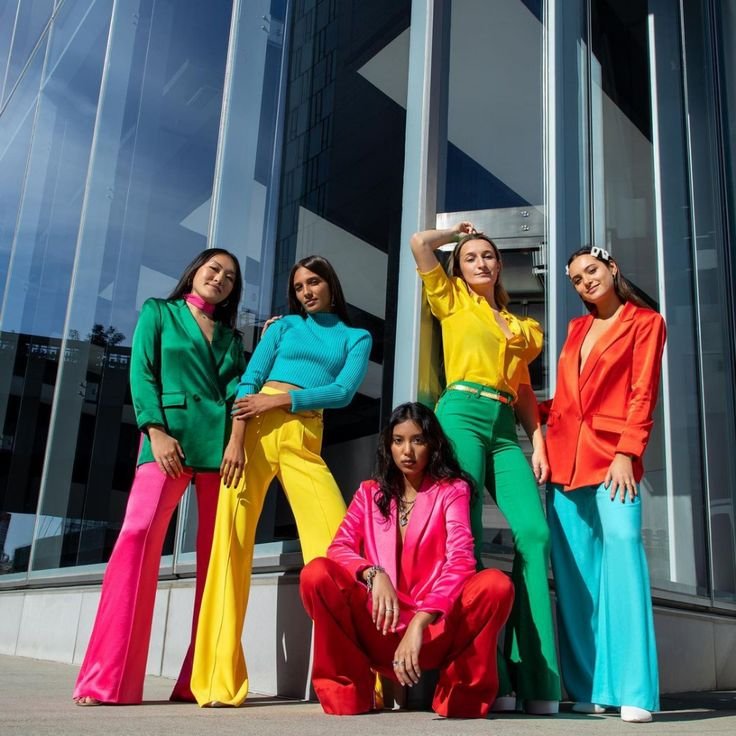
Pantone’s Colour of the Year — an annual pronouncement that drives billions in retail inventory decisions — has trended emphatically toward high-saturation, emotionally warm choices since 2020. Not because the colour forecasters have collectively decided to cheer up, but because the data from consumer behaviour shows that saturated colour converts at higher rates, generates stronger emotional brand association, and produces greater post-purchase satisfaction than neutral alternatives.

The wellness industry has understood colour psychology for decades — using it deliberately in everything from hospital design to workplace environments to food packaging. Fashion is the last major industry to take it seriously. The evidence that it should has been available for years.


Dressing With Intention

The practical application of dopamine dressing is simpler than the neuroscience that underlies it. It begins with a single question, asked honestly on the morning of each day: what do I need to feel today?

Not what do I need to look like. Not what will be appropriate, or practical, or safe. What do I need to feel. The answer — energy, calm, confidence, protection, warmth, focus — maps onto colour choices with a directness that requires no specialist knowledge. The body already knows. The wardrobe, if you have built it with any intention, already contains the answer.

The yellow dress already knows what it is doing. The question is whether you are willing to let it.


Explore more fashion, science, and global culture at Write Matrix

You Might Also Like

The “SaaS-Pocalypse” Myth: Why AI Isn’t Killing Commercial Software

The Basque Waistline Returns: Why This Dress Detail Is Suddenly Everywhere

Tanzania’s New Overwater Suites Are Bringing the Maldives Model to East Africa

The Chedi Wadi Safar: Inside Saudi Arabia’s Desert Valley Luxury Debut

The Suit Skirt Is Officially the Chicest Way to Wear Tailoring This Year

TAGGED: Fashion, Global, Lifestyle, Marketing

Sign Up For Daily Newsletter

Be keep up! Get the latest breaking news delivered straight to your inbox.

By signing up, you agree to our Terms of Use and acknowledge the data practices in our Privacy Policy. You may unsubscribe at any time.
Share This Article
Facebook Twitter Copy Link Print
Share
Previous Article The Rainforest That Predates the Amazon: Inside Borneo’s Danum Valley
Next Article The Arctic Is Open: Why the Melting Ice Cap Has Become the Most Contested Real Estate on Earth
Leave a comment

Leave a Reply Cancel reply

Your email address will not be published. Required fields are marked *

Stay Connected

248.1kLike
69.1kFollow
134kPin
54.3kFollow
banner banner
Create an Amazing Newspaper
Discover thousands of options, easy to customize layouts, one-click to import demo and much more.
Learn More

Latest News

The “SaaS-Pocalypse” Myth: Why AI Isn’t Killing Commercial Software
Softwares
The Basque Waistline Returns: Why This Dress Detail Is Suddenly Everywhere
Fashion
Tanzania’s New Overwater Suites Are Bringing the Maldives Model to East Africa
Travel
The Chedi Wadi Safar: Inside Saudi Arabia’s Desert Valley Luxury Debut
Travel

You Might also Like

Fashion

K-Beauty Spicules Are 2026’s Buzziest Exfoliation Ingredient: Here’s What They Do

Vivian Cao Vivian Cao 5 Min Read
Ecommerce

The Gift That Doesn’t End Up in a Drawer: Why Xteink Is the Thoughtful Gift Readers Actually Want

Vivian Cao Vivian Cao 5 Min Read
Ecommerce

Why Shopify Still Outpaces Every Other Way to Start an Online Store

Vivian Cao Vivian Cao 5 Min Read
//

Writematrix can be positioned as a multi-niche content-driven website publisher. It can cover various categories, attracting diverse audiences and maximizing revenue streams.

Quick Link

  • Home
  • Travel
  • News
  • Fashion
  • Ecommerce
  • Softwares

Support

  • Home
  • Blog
  • Contact
  • Privacy Policy
  • Terms and Conditions

Join our Community !!

Subscribe to our newsletter to get our newest articles instantly!

    Write MatrixWrite Matrix
    Follow US
    © 2025 Write Matrix. All Rights Reserved | Crafted by Developer Mods
    Join Us!

    Subscribe to our newsletter and never miss our latest news, podcasts etc..

    Zero spam, Unsubscribe at any time.
    Welcome Back!

    Sign in to your account

    Lost your password?