


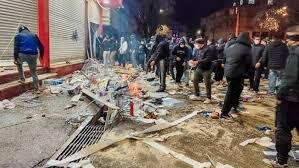
Iran is witnessing one of the largest waves of public unrest in recent years. What began as protests over rising living costs and economic hardship has quickly escalated into widespread demonstrations with broader political undertones. Across Tehran, Mashhad, Shiraz, Isfahan, and dozens of other cities, Iranians are taking to the streets to express frustration with both the economy and the government.
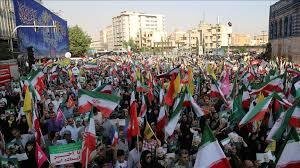
The protests, which began in late December 2025, reflect deep-seated dissatisfaction with Iran’s economic situation. The country has been grappling with a plummeting rial, skyrocketing inflation, and shortages of essential goods. Many citizens are struggling to meet basic needs, and daily life has become increasingly difficult. The economic instability has particularly affected the middle and lower classes, who feel the brunt of high prices and unemployment.
As the protests grew, they began to take on political dimensions. Demonstrators are no longer solely focused on economic grievances—they are demanding accountability and reforms within Iran’s political system. Slogans calling for systemic change have appeared in city squares, and many protesters are directly criticizing authorities. This shift underscores how economic hardship can quickly translate into broader calls for political reform when citizens feel their voices are ignored.
The Iranian government’s response has been forceful. Security forces, including the Islamic Revolutionary Guard Corps (IRGC), have been deployed to major urban centers to disperse crowds. Reports indicate the use of tear gas, arrests, and in some cases, lethal force. These measures, however, have not quelled the protests. Instead, they have fueled further resentment, with many Iranians viewing the crackdown as evidence of systemic injustice.
A key factor in the unrest is the government-imposed internet blackout, which has limited access to social media and messaging apps. The restrictions aim to curb the organization of protests and limit international reporting, but Iranians are finding alternative ways to communicate, including satellite internet and virtual private networks (VPNs). Despite these obstacles, the movement has maintained momentum, demonstrating the protesters’ resilience and determination.
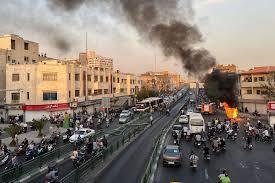
The geopolitical dimension of the protests cannot be ignored. International observers and governments have expressed concern over human rights violations and urged restraint. Some foreign leaders have voiced support for the protesters, which Iran’s authorities have denounced as interference in domestic affairs. The unrest also has implications for regional stability, as Iran plays a pivotal role in Middle Eastern politics and energy markets.
Economic issues remain at the heart of the unrest. Iran’s population faces soaring food prices, limited access to essential goods, and high unemployment. Many protesters are small business owners, shopkeepers, and workers who have seen their livelihoods deteriorate. While the government has proposed measures to stabilize the economy, citizens remain skeptical, citing corruption and ineffective policy implementation.
The protests in Iran illustrate a broader trend: when economic crises persist without meaningful political reforms, civil unrest is often inevitable. Citizens are demanding not just short-term economic relief but structural changes that address inequality, corruption, and the concentration of power. The outcome of these protests will have significant implications for Iran’s domestic politics and its international relationships.
In conclusion, Iran’s current wave of protests is more than a response to economic hardship—it is a call for political accountability and systemic reform. The country faces a critical moment: how it responds to the unrest may shape its social, economic, and political landscape for years to come. For now, Iranians continue to brave street demonstrations, expressing a clear message that economic despair and political dissatisfaction cannot be ignored.