

There is a particular kind of exhaustion that has nothing to do with working too hard. It is the exhaustion of working hard on the wrong things — of spending three hours in a status meeting that could have been a dashboard, of chasing a colleague across four different apps to find out where a project stands, of watching a deadline quietly approach while nobody is entirely sure who is responsible for the last three steps.
This is not a people problem. It is a systems problem. And in 2026, the teams that have solved it — the ones that move faster, deliver more consistently, and somehow seem less stressed than everyone around them — are almost universally working on the same platform.
That platform is monday.com.
Not Just a Project Management Tool. An Entire Work Operating System.
The easy mistake is to file monday.com alongside every other task management app you’ve tried and quietly abandoned. The kanban board that nobody updated after week two. The spreadsheet that three people were editing differently. The project tool that was supposed to bring clarity and instead added a new layer of administrative friction to every single thing you tried to do.
monday.com is not that. It is something categorically different — and the distinction matters.
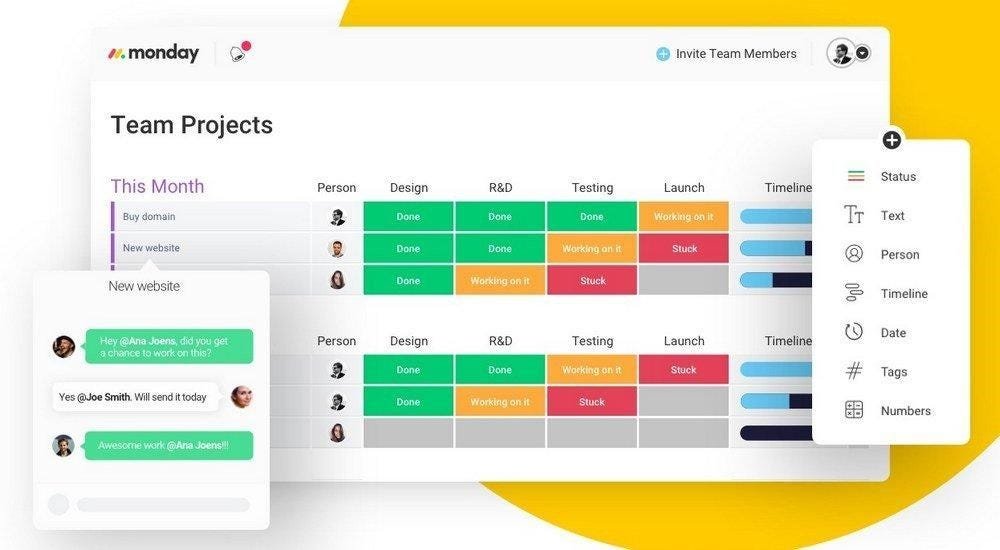
Where most tools give you a place to list tasks, monday.com gives you a living, connected operating system for the way your entire business actually works. Projects, campaigns, pipelines, sprints, hiring workflows, client deliverables, IT support tickets — all of it, in one platform, visible to the right people, moving in real time.
The result is not just better organisation. It is a fundamentally different relationship with work — one where nobody has to ask “where are we on this?” because the answer is always, already, right there on the screen.
The AI Layer That Changes Everything
monday.com in 2026 is not the same platform it was two years ago. The integration of AI — not as a gimmick, not as a chatbot bolted onto an existing product, but as a genuine operational layer woven into the work itself — has transformed what teams can achieve.
monday AI agents work alongside your people as a continuous, tireless workforce. They automate the repetitive: updating statuses, routing requests, generating summaries, flagging blockers, and moving items through workflows without waiting for someone to remember to do it manually. The kind of administrative overhead that silently consumes 20–30% of a knowledge worker’s week — gone.
monday Sidekick, the platform’s personal AI assistant, understands the context of your work. It drafts updates, surfaces relevant information, suggests next steps, and helps individuals prioritise across competing demands — acting less like a tool and more like the most organised colleague you’ve ever had.
For teams that have wrestled with the productivity paradox — more tools, more hours, less output — the AI layer is not an upgrade. It is the answer they have been waiting for.
Built for Every Team, Not Just the Technical Ones
One of monday.com’s most underappreciated strengths is its genuine cross-functional reach. This is not software built for developers that marketing teams are grudgingly forced to adopt. It is a platform that has been purpose-built for the full spectrum of how modern organisations operate.
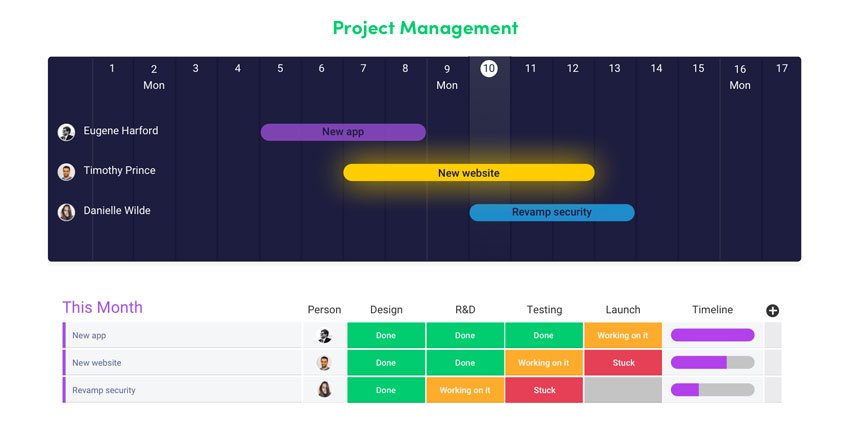
Marketing teams run campaigns, creative briefs, and content calendars. Sales teams manage pipelines and deals. HR teams track hiring and onboarding. Operations teams map processes. Product and dev teams run sprints and releases. IT teams handle service and support. And every one of these workflows — entirely different in their logic and vocabulary — runs inside the same platform, connected, visible, and coherent.
For leadership, that cross-functional visibility is transformational. A single dashboard showing the real-time health of marketing, sales, product, and operations simultaneously is not a luxury. In 2026, it is how competitive organisations run.
The Teams Already Using It
Over 225,000 organisations across 200 countries run on monday.com. From global enterprises to fast-scaling startups, from construction firms to media agencies, from government bodies to retail chains. The platform’s adaptability — the ability to build your exact workflow, not fit your workflow into a rigid template — is what has driven that breadth of adoption.
The question is not whether monday.com works. The organisations using it have already answered that. The question is how much longer your team can afford to work without it.
The Bottom Line
Productivity is not about working more hours. It is about every hour of work producing a clear, visible, measurable result. monday.com is the platform that makes that possible — for individuals, for teams, and for entire organisations.
The chaos is optional. The clarity is one platform away.
Start your free trial on monday.com →
More technology, productivity, and global business insights at Write Matrix