


There’s a moment every creative knows. The blank canvas. The cursor blinking on an empty timeline. The photograph that’s almost perfect but not quite. That gap between what exists and what you can imagine — Adobe has spent four decades building the bridge across it.
And somewhere along the way, it stopped being a software company. It became the creative infrastructure of the world.
Before Adobe, There Was Limitation
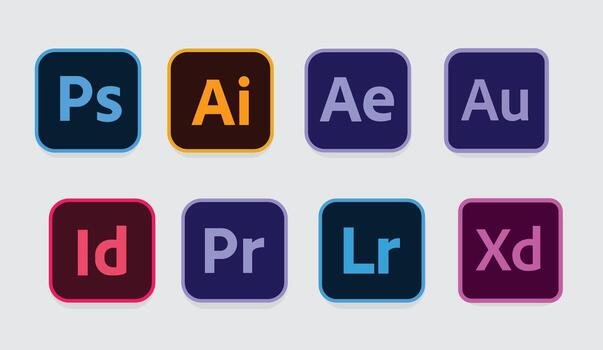
Cast your mind back to a world without Photoshop. Without Premiere Pro. Without Illustrator, After Effects, Acrobat, or InDesign. It sounds almost impossible now — because those tools don’t just help people create things. They define how creation happens. They set the vocabulary. The PSD file. The PDF. The MP4 export. These aren’t just file formats. They are the language in which the modern world communicates visually.
Adobe didn’t stumble into that position. It earned it — one painful version update, one revolutionary feature, one industry-reshaping product at a time.
The Quiet Genius of Adobe’s Ecosystem
What makes Adobe genuinely exceptional — and genuinely hard to replicate — isn’t any single product. It’s the ecosystem.
A photographer shoots a campaign in Lightroom, touches it up in Photoshop, exports to Illustrator for layout, drops it into InDesign for the magazine spread, renders the video cut in Premiere Pro, adds motion graphics in After Effects, and delivers the final brief as a PDF via Acrobat. That entire workflow, from first RAW file to final signed document, lives inside one suite. One Creative Cloud login. One subscription.
No other software company on earth has built that kind of end-to-end creative pipeline. And no other company has managed to make professionals in photography, video, graphic design, UX, motion graphics, publishing, and marketing all feel like the tools were built specifically for them.
That’s not product development. That’s platform thinking at its finest.
Adobe in 2026: Not Resting, Reinventing
The lazy story about Adobe would be: dominant company defends its turf. The true story is more interesting.
Adobe Firefly — its generative AI suite — has been one of the most commercially thoughtful AI launches in the tech industry. While competitors rushed AI image generation to market with no regard for creator rights or commercial viability, Adobe built Firefly on ethically sourced, licensed content. Commercially safe from day one. Trusted by agencies, brands, and enterprise teams who cannot afford the legal ambiguity surrounding other AI tools.
Adobe Express has democratised design for the non-designer — putting brand-consistent, professional-quality content creation in the hands of marketers, small business owners, and social media managers who don’t have a Photoshop bone in their body.
And Adobe Acrobat AI Assistant is quietly transforming how the world handles documents — summarising contracts, extracting insights from reports, and turning static PDFs into interactive, intelligent knowledge assets.
This is a company that does not mistake legacy for permanence. It keeps building.
What Adobe Means for the Creator Economy
The numbers are staggering. Over 33 million creative professionals worldwide use Adobe Creative Cloud. But the more meaningful figure is this: nearly every major piece of visual content you have consumed today — the billboard, the magazine cover, the film trailer, the app icon, the website you’re reading — was touched by Adobe software at some point in its creation.
That is not market share. That is cultural infrastructure.
For anyone building a brand, telling a story, designing a product, or communicating visually in the modern world — Adobe is not optional. It is the foundation.
The Bottom Line
Great tools don’t just make great work easier. They make work that wasn’t previously possible, possible. Adobe has done that — repeatedly, consistently, and across more creative disciplines than any other company in history.
If you create, you already know this. If you’re just starting out, there’s one place to begin.
Explore the full Adobe Creative Cloud suite →
Because the distance between your idea and the world seeing it has never been shorter — and Adobe built the road.