



Somewhere in a distribution centre outside Amsterdam, a vintage Levi’s jacket from 1987 is being photographed, authenticated, priced, and listed for sale to a buyer in Seoul who found it through an algorithm that understood her style better than most retailers ever have. The jacket has already had three owners. It will likely have three more.
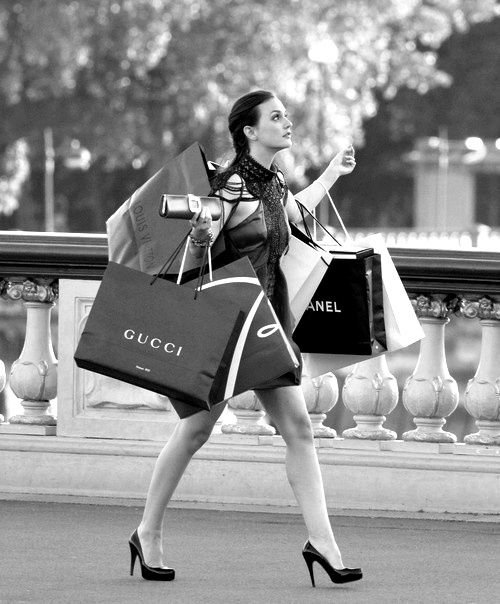
This transaction — unremarkable by 2026 standards — would have been commercially invisible a decade ago. Today, it is part of the most significant structural shift in fashion since the invention of ready-to-wear clothing. The second-hand market is not a fringe economy anymore. It is the industry’s fastest-growing segment, its most culturally credible sector, and increasingly, its most profitable frontier.
And the platforms that built themselves on other people’s discarded clothing are now worth more than some of the brands that made the clothes in the first place.
The Numbers That Rewrote the Industry’s Assumptions
The global second-hand and resale fashion market was valued at approximately $227 billion in 2023. By 2028, it is projected to reach $350 billion — growing at nearly three times the rate of the broader fashion market. In the United States alone, the resale sector is expected to be larger than fast fashion by 2027, a crossover that would have seemed absurd as recently as 2015.
ThredUp, Depop, Vinted, Vestiaire Collective, The RealReal, Poshmark, StockX — these are not niche platforms serving a sustainability-conscious minority. They are mass-market commercial operations processing millions of transactions per month, spending hundreds of millions on marketing, and competing directly with H&M, Zara, and ASOS for the same customer’s fashion budget.
Vinted, the Lithuanian peer-to-peer resale platform, surpassed 100 million registered users in 2024 and became one of the most downloaded shopping apps in Europe — ahead of most traditional fashion retailers. ThredUp processed over 100 million secondhand items in a single year. Vestiaire Collective, the luxury resale platform, counts over 23 million members across 80 countries, with a catalogue that includes authenticated pieces from Hermès, Chanel, and Louis Vuitton at prices that consistently attract buyers who would never enter a boutique.
The market did not grow into this. It erupted.
Why Now: The Three Forces That Collided
Three distinct forces converged in the early 2020s to produce the resale explosion — and understanding them explains why the growth is structural rather than cyclical.
1. The Economic Pressure That Changed Shopping Behaviour
The cost-of-living crisis that swept through developed economies from 2022 onwards permanently recalibrated how a generation thinks about clothing expenditure. For millions of consumers — particularly those aged 18 to 35 — the question shifted from “is this new?” to “is this worth it?” Second-hand platforms offered an answer that new retail simply could not match: the same brands, often the same quality, at a fraction of the price. Once that discovery was made, the habit formed. And habits, in retail, are extraordinarily durable.
2. The Cultural Reframe That Made Used Clothing Desirable
For most of fashion’s modern history, second-hand clothing carried a stigma that made it the last resort rather than a first choice. That stigma has not just diminished — it has inverted. Among consumers under 35, buying second-hand is now a mark of taste, resourcefulness, and environmental awareness. Thrifting has become culturally aspirational in a way that no marketing campaign manufactured. It emerged organically from a generation that grew up watching fast fashion’s environmental damage unfold in real time and decided, collectively, that they wanted no part of the system that produced it.
3. The Technology That Made Scale Possible
The third force is the least discussed but arguably the most transformative. The resale market at scale was a logistical impossibility without the technology that now powers it. AI-driven authentication, computer vision for condition grading, recommendation algorithms that match buyer preferences to seller inventory across millions of listings, logistics networks optimised for individual low-value parcels — these are the invisible infrastructure of a market that handles extraordinary complexity with apparent simplicity.
Vestiaire Collective’s authentication technology can now assess the legitimacy of a luxury handbag from photographs alone with an accuracy rate that rivals physical inspection. StockX applies financial market mechanics — real-time bid and ask pricing, trading history, market indices — to sneakers and streetwear, transforming fashion items into investable assets. These are not incremental improvements on a traditional retail model. They are entirely new commercial architectures built on top of fashion’s existing inventory.
The Luxury Sector’s Complicated Relationship With Its Own Resale Market

Nowhere is the resale revolution more structurally disruptive than in the luxury fashion segment — and nowhere is the industry’s response more conflicted.
For decades, luxury houses controlled their brand value in part through scarcity — limited production runs, selective distribution, the cultivated difficulty of acquisition. The resale market fundamentally undermines that control. A Chanel bag listed on Vestiaire is accessible to anyone with a credit card and an account. The house receives nothing from the transaction. The brand association, however, persists and amplifies.
Some luxury brands have responded by attempting to suppress resale — refusing authentication services, designing built-in obsolescence into certain pieces. Others have moved in the opposite direction, acquiring or partnering with resale platforms to capture a share of the secondary market they cannot control. Richemont, owner of Cartier and IWC, acquired Watchfinder, the pre-owned watch platform, in 2018 — an early recognition that the secondary market was a commercial reality to be harnessed rather than resisted.
Rolex’s authorised certified pre-owned programme, launched in 2022, was the clearest signal that luxury had accepted the terms of the new market. If you cannot beat the resale economy, build a better version of it with your own name on the authentication certificate.
What This Means for the Future of Fashion
The resale throne is not a temporary position. The platforms that now occupy it have structural advantages — inventory breadth, price transparency, community trust, and algorithmic sophistication — that traditional fashion retail is genuinely struggling to replicate.
The brands most at risk are not the luxury houses, who have the cultural cachet and margin structure to adapt. They are the mid-market fashion retailers — the ones who built their business on the proposition of accessible newness — who now find themselves competing for the same customer against a market that offers their own previous seasons at 60% of the original price, authenticated and delivered in two days.
The consumer has been handed a choice that did not previously exist: new and expensive, or almost-new and half the price. And they are, in growing and irreversible numbers, choosing the second option.
Fashion is being resold back to itself. And the market has decided, with the clarity it always eventually achieves, that this is simply better.
Explore more fashion, culture, and global commerce at Write Matrix