


The Cotswolds has a crowding problem, and increasingly, it’s one you can measure in tour bus schedules. Honey-stone villages like Bibury and Castle Combe now see coach traffic dense enough that some parish councils have started restricting visitor parking outright. Ninety-five miles south of that congestion, along the coast of Dorset and East Devon, sits a landscape offering the same rich English countryside charm, dramatic scenery, historic towns, genuine local character, minus the crowds, plus something the Cotswolds simply can’t compete with: two hundred million years of fossil history sitting directly underfoot.
England’s Only Natural World Heritage Site
The Jurassic Coast holds a genuinely singular distinction: it’s England’s only UNESCO World Heritage Site recognised for natural rather than cultural significance, protected specifically because its exposed cliffs offer an almost unbroken 185-million-year record of Earth’s geological history, from arid Triassic desert landscapes through the rise of the great marine reptiles that once patrolled shallow tropical seas covering this exact stretch of England. Walking the coast path here isn’t simply scenic, it’s genuinely educational in a way few landscapes anywhere manage, each headland and exposed rock layer functioning as a physical timestamp of a different prehistoric era.
Lyme Regis and the Woman Who Started It All
No single figure looms larger over the Jurassic Coast’s identity than Mary Anning, born in Lyme Regis in 1799, who began fossil hunting as a child to help support her family and went on to make discoveries that fundamentally reshaped scientific understanding of prehistoric life. Anning and her brother uncovered some of the first complete ichthyosaur and plesiosaur skeletons ever found, specimens that eventually made their way to London’s Natural History Museum, where several remain on display today. Her legacy is still actively honoured, the annual Lyme Regis Fossil Festival, organised with major support from the Natural History Museum, continues to celebrate the town’s geological heritage and educate visitors on ongoing paleontological research. The beaches between Lyme Regis and Charmouth remain genuinely productive fossil-hunting ground even now, ammonites, belemnites, and the occasional ichthyosaur fragment still surfacing after storms erode the cliffs, though a guided tour with a local expert is strongly recommended both for identification and for navigating tidal timing safely.
The Landmarks That Rival Anything in the Cotswolds
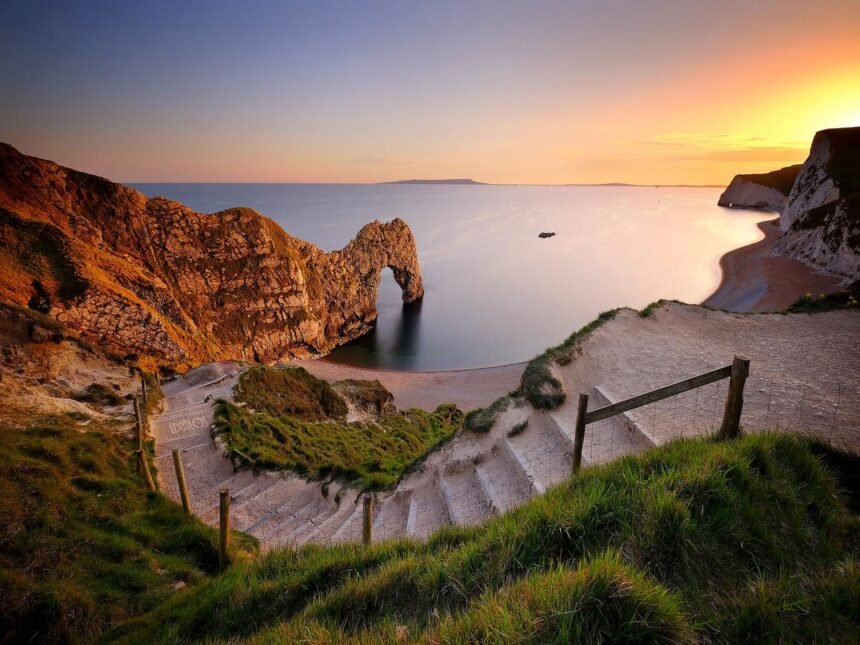
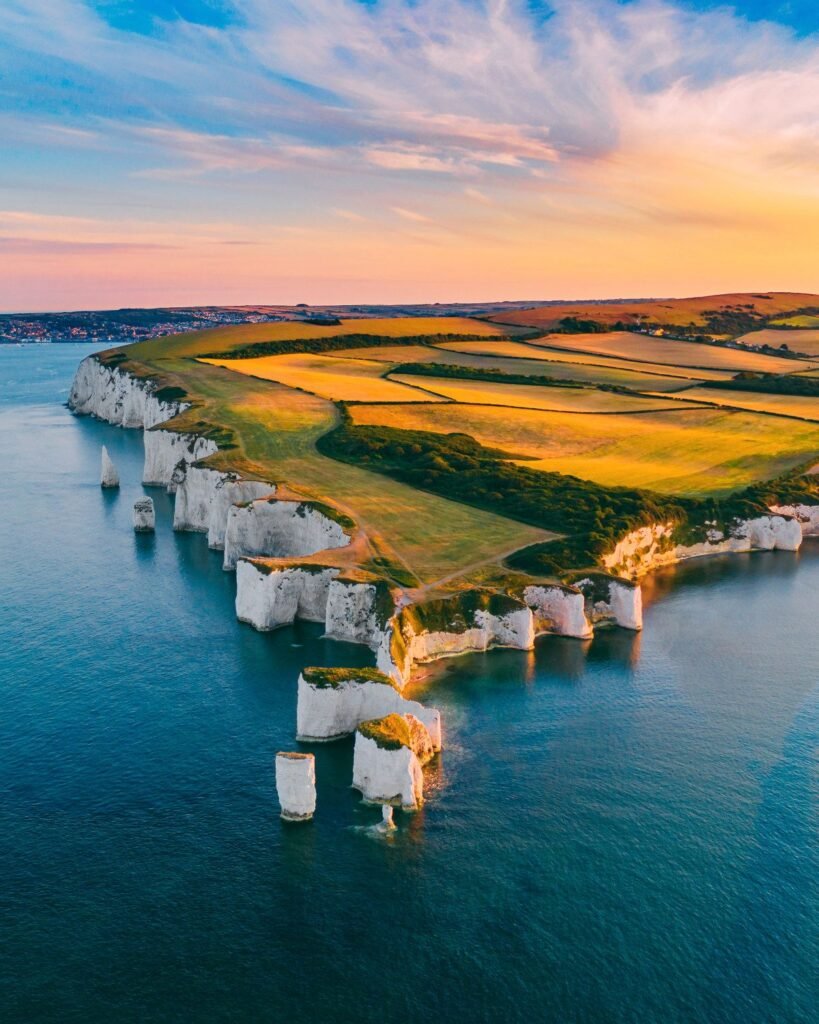
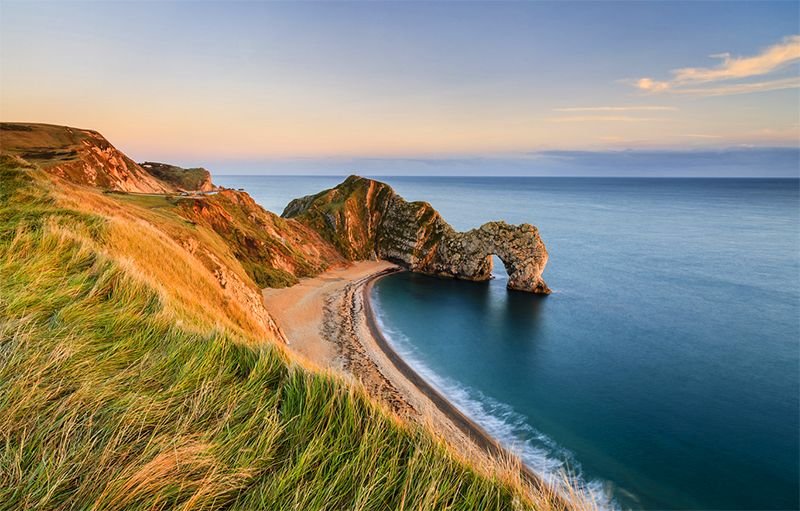
Beyond fossils, the coast delivers some of England’s most photographed natural landmarks. Durdle Door, a soaring natural limestone arch shaped by millions of years of erosion, remains the region’s signature image, best experienced at dawn or after the day-trip coaches clear out, when the arch turns silhouette-dark against a genuinely excellent stretch of night sky. Nearby Lulworth Cove offers a near-perfectly circular bay carved by relentless wave action, while further east, the chalk sea stacks of Old Harry Rocks mark the coast’s easternmost point, remnants of a once-continuous formation gradually separated by the sea. Each site carries its own distinct character, Lyme Regis feels historic and fossil-focused, Durdle Door and Lulworth read as more iconic and instantly recognisable, and Studland’s chalk cliffs offer something quieter and more contemplative.
Getting There Without a Car
Part of the coast’s appeal for travellers tired of Cotswolds traffic is that it’s genuinely accessible without one. Great Western Railway has partnered directly with UNESCO to run dedicated Jurassic Coast rail trails, including routes tracing Exmouth’s red Triassic cliffs and Weymouth’s coves and arches, positioning train travel as a legitimate, sustainable way to experience the coast rather than a fallback for visitors without a car. For those driving, the coast connects easily via the A35, with the X53 bus running the entire stretch between Exeter and Poole for travellers piecing together a car-free multi-day route.
Why It Deserves to Replace the Cotswolds on Your Itinerary
The Cotswolds sells a fantasy of timeless English countryside that’s become genuinely difficult to experience peacefully given how popular that fantasy has become. The Jurassic Coast offers something the Cotswolds structurally cannot: a landscape whose primary draw isn’t picturesque villages but two hundred million years of documented planetary history, still actively yielding new discoveries with every storm that reshapes its cliffs. For travellers seeking English countryside without the crowd-management headache, and genuinely rare geological and paleontological significance layered on top, the Jurassic Coast isn’t just a quieter alternative. It’s arguably the more substantial trip.