


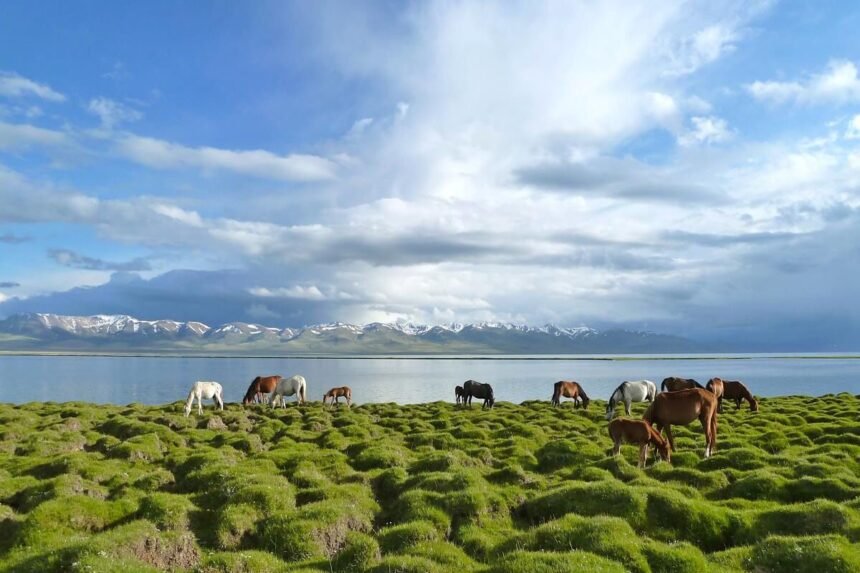
There is a moment, somewhere past the third mountain pass on the road out of Kochkor, when the trees disappear entirely and the landscape opens into something closer to another planet than another country. This is the approach to Song-Kul, an alpine lake sitting at 3,016 metres in Kyrgyzstan’s Tian Shan range, ringed by treeless pastures where Kyrgyz shepherd families have moved their households, their livestock, and their entire way of life every summer for centuries. There is no better description for what happens here than the plainest one: you don’t visit Song-Kul so much as get temporarily absorbed into it.
A Living Culture, Not a Performance
From June through September, dozens of nomadic families migrate to Song-Kul’s high summer pastures, known locally as jailoos, bringing horses, sheep, and yaks up from the valleys to graze on grass that only exists this lush at altitude and only for this brief window. This is not a cultural demonstration staged for visitors. It is the actual seasonal rhythm these families have followed for generations, and the yurt camps ringing the lake’s roughly twenty-nine-kilometre shoreline exist because travellers are welcome to join that rhythm temporarily, not because the rhythm was built around them. Guests who stay typically find themselves genuinely folded into daily life: helping milk mares at dawn, learning to make kumis, the mildly fermented mare’s milk that remains a staple across the region, and riding horses across pastures where the nearest paved road is often a day’s journey away.
What a Yurt Stay Actually Involves
Camps are arranged in a now-familiar pattern, a curved line of sleeping yurts surrounding a central communal tent and kitchen, where the host family prepares every meal from scratch given how limited store-bought resources are at this altitude and distance from any town. Facilities remain genuinely basic at most traditional camps, shared toilets, no showers, no electricity, though a growing number of upgraded operations now offer solar lighting and hot water trucks for travellers who want a slightly softer landing. Budget camps run roughly fifteen to twenty-five dollars per person per night including meals, while mid-range and premium community-based tourism camps, which route more of their profit directly to the shepherd families themselves, run closer to sixty to eighty dollars. Most bookings run through Community Based Tourism offices in Kochkor or Bishkek, ideally arranged a week or two ahead during the July-August peak, though off-season walk-ins are often still possible.
The Altitude Is Real, and Worth Respecting
Song-Kul sits higher than most Colorado ski resorts, and the altitude is not a minor detail. An estimated forty percent of visitors experience some degree of mild altitude sickness, headaches, breathlessness, disrupted sleep, particularly travellers who ascend too quickly. The standard, sensible approach is to spend at least a night or two acclimatising in Bishkek or Kochkor before making the climb, drink significantly more water than usual, and avoid alcohol for the first day or two at elevation. Nights remain genuinely cold even in the height of summer, temperatures regularly drop below freezing after dark regardless of how warm the afternoon felt, so packing real insulating layers matters more than the calendar month might suggest.
Why Sunrise Is the Moment to Chase
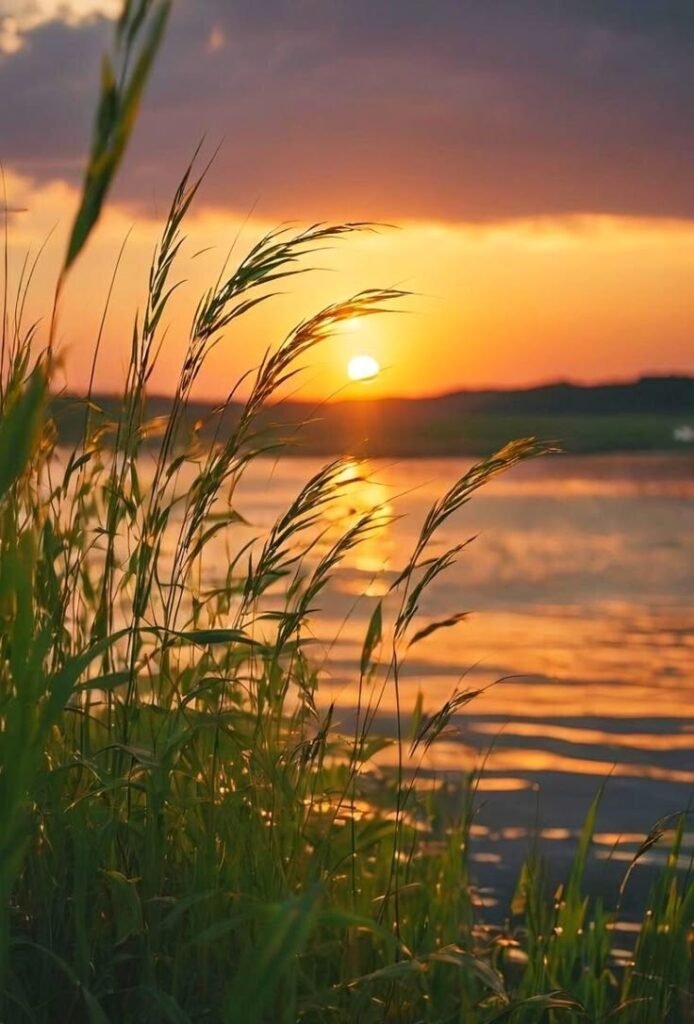
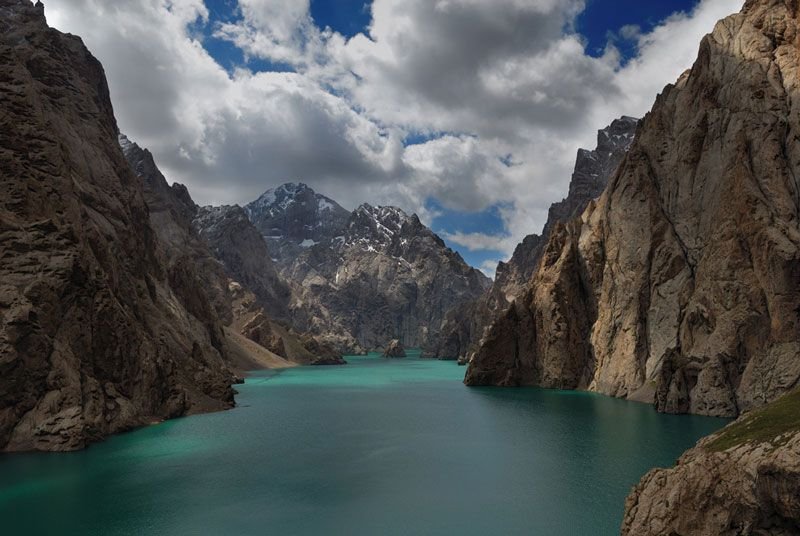
Song-Kul’s defining image, and the reason serious photographers return season after season, is what happens at first light: mist lifting off still water, horses silhouetted against a sky just beginning to colour, and a stillness that comes from being genuinely far from any other form of settlement. The lake’s remoteness, no permanent buildings, no roads beyond dirt tracks, no connectivity, is precisely what makes that sunrise land differently than it would anywhere more developed. This is also, weather permitting, one of the best stargazing locations in Central Asia, with the Milky Way visible in enough structural detail to make the trip worthwhile after dark alone.
Why It Belongs on the Itinerary
Kyrgyzstan holds onto more genuine nomadic tradition than almost anywhere else in Central Asia, and Song-Kul is where that tradition remains least filtered for outside consumption. For travellers willing to trade reliable plumbing and phone signal for something considerably rarer, a real window into a way of life still lived rather than reenacted, few places left in the world offer it as honestly as a yurt on Song-Kul’s shore at sunrise.