


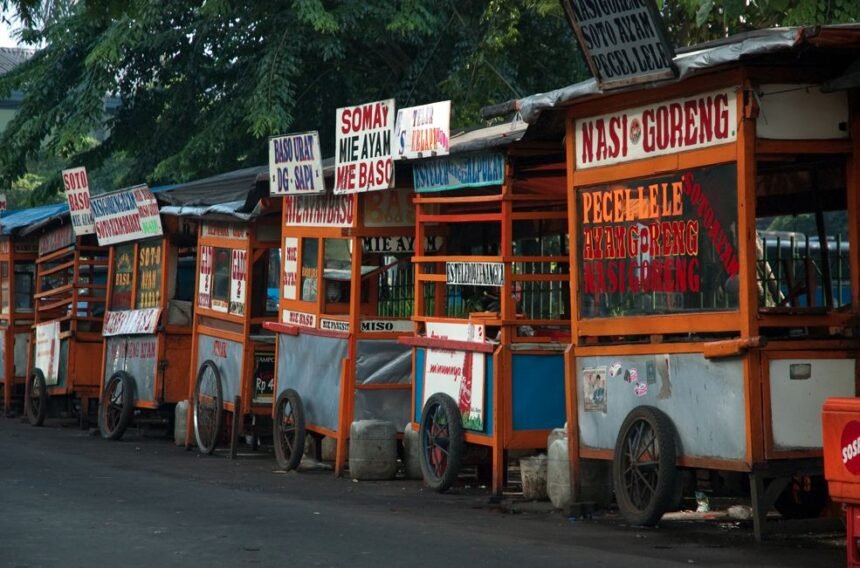
There is an old, outdated school of travel thought that says the safest, most sophisticated way to experience a country’s food is behind the glass windows of a high-end restaurant. But if you have traveled with an open mind lately, you know the absolute opposite is true. White tablecloths and pristine plating have a tendency to homogenize flavor.
If you want to understand the actual heartbeat of a culture, you have to head to the pavement.
Street food is the ultimate equalizer. It is where multi-generational family recipes, raw geography, and intense culinary competition collide under the glow of a fluorescent bulb or a charcoal flame. In these ten countries, street food isn’t just a cheap convenience; it is a complex, hyper-technical culinary ecosystem that will permanently rewrite your relationship with food.
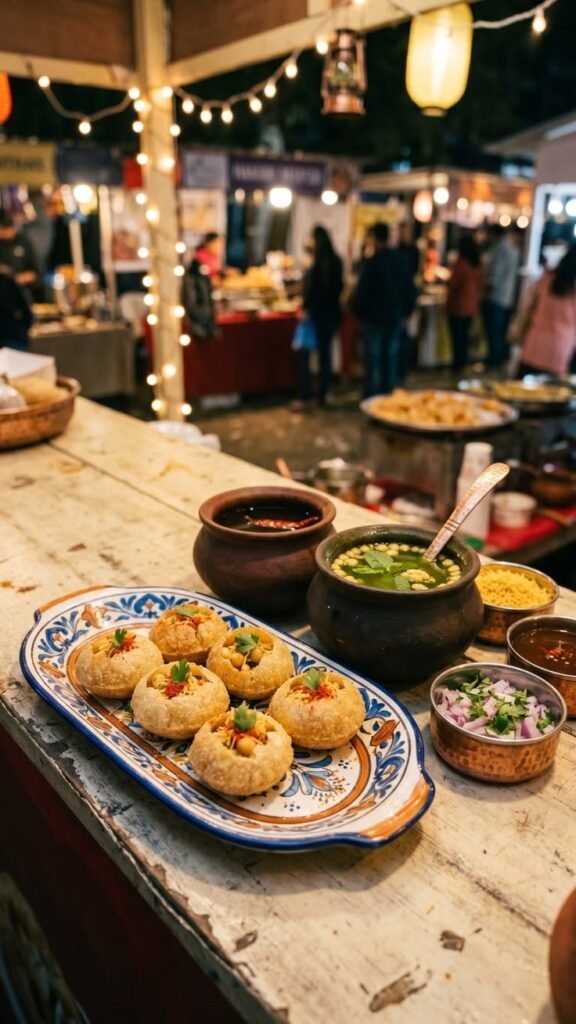
1. India: The Masters of Texture and Complex Acid
To eat street food in India—whether it’s the chaotic stalls of Mumbai or the historical lanes of Old Delhi—is to realize that Western dining often ignores the power of texture. The undisputed king of the pavement here is Chaat.
Take Pani Puri as a prime example. You are handed a hollow, crisp fried dough ball, cracked open on the spot, stuffed with spiced potatoes and chickpeas, and filled to the brim with a chilled, intensely tart tamarind and mint water. You have to eat it whole, in one bite. The result is a literal explosion of temperature, crunch, spice, and acid that forces your brain to recalibrate what a single mouthful of food can achieve.
2. Thailand: The Equilibrium of Five Flavors
Bangkok’s night markets are legendary for a reason. Thai street food is a masterclass in balance, specifically the tension between sweet, sour, salty, bitter, and hot. Stalls specializing in Som Tum (pounded green papaya salad) demonstrate this beautifully. Watch the vendor work the mortar and pestle: fresh bird’s eye chilies, raw garlic, palm sugar, lime juice, fish sauce, and dried shrimp are bruised together until they form a perfectly harmonious, electric dressing. It is loud, unpretentious food that hits every sensory receptor simultaneously.
3. Mexico: The Architectural Brilliance of the Taco
In Mexico City, the street corner puesto (stall) is holy ground. Mexican street food teaches you that simple components can be engineered into culinary high art. The specialty here is the meticulous attention to detail. A single taco al pastor relies on pork marinated for hours in achiote and chilies, shaved thin off a vertical spit, topped with a precise slice of pineapple, raw onions, and cilantro, all resting on a warm, nixtamalized heirloom corn tortilla. It is portable, structurally sound, and possesses a depth of flavor that rivals any slow-cooked French roast.
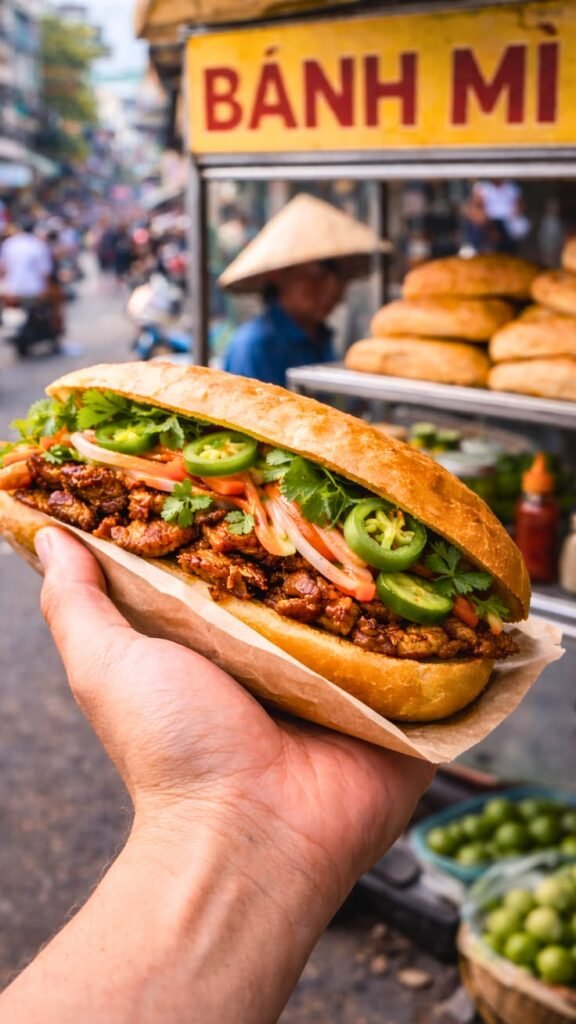
4. Vietnam: The Art of Fresh Subtlety
While many street food cultures rely on heavy spices and deep frying, Vietnam’s streets win on sheer freshness and herbal brightness. Walking through Hanoi or Ho Chi Minh City, the air is thick with the scent of star anise and charred ginger from bubbling cauldrons of Phở. Sitting on a tiny plastic stool on the sidewalk, you are served a bowl of clear broth that has been simmered for twelve hours, packed with fresh rice noodles, tender beef, and a mountain of raw herbs, lime, and chili. It is clean, restorative, and proof that street food can be incredibly delicate.
5. Japan: The Precision of the Micro-Specialty
Japan turns the concept of street food on its head. Here, vendors rarely serve a massive menu; instead, they spend their entire lives perfecting one single item. In Osaka’s neon-lit alleys, you seek out Takoyaki (custardy, battered octopus balls cooked in specialized iron molds). The outer shell is perfectly crisp, while the interior remains molten and rich, topped with savory brown sauce, Japanese mayo, and dancing bonito flakes. It is a lesson in extreme focus and technical execution.
6. Turkey: The Maritime and Charcoal Ritual
Istanbul is a city split across two continents, and its street food reflects that bridge. Along the Bosphorus, the smoke of charcoal grills fills the air. You can grab a Balık Ekmek (freshly grilled mackerel stuffed into crusty bread with onions and lemon) straight off a rocking boat, or dive into Dürüm—spiced lamb wrapped in ultra-thin lavaš bread. Turkish street food teaches you that when your raw ingredients and charcoal techniques are flawless, you don’t need to hide behind complicated sauces.
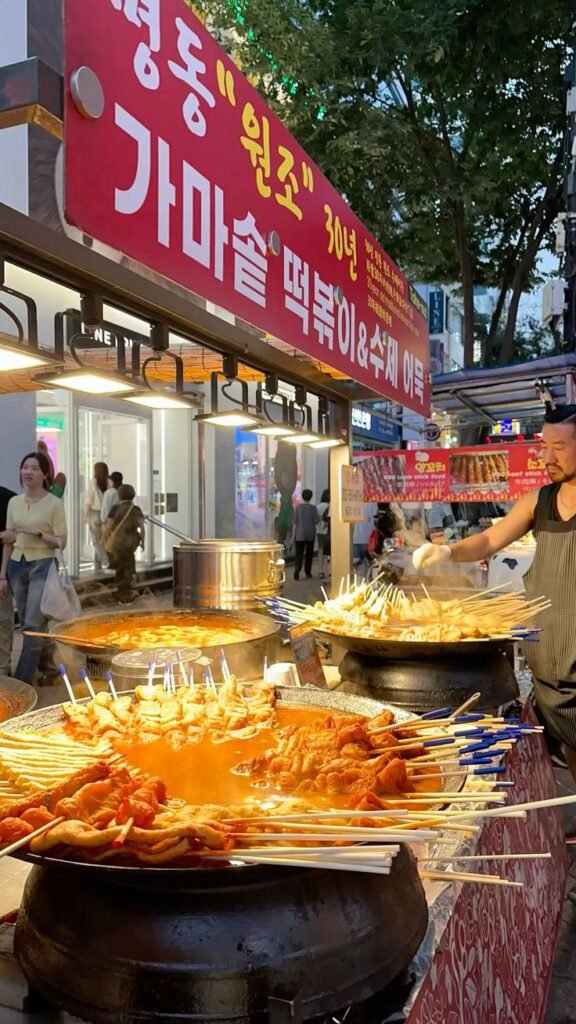
7. South Korea: The Umami of Fermentation
Seoul’s pojangmacha (tented street stalls) are the ultimate late-night sanctuaries. Korean street food is bold, heavy-hitting, and deeply comforting. The staple here is Tteokbokki—chewy, cylindrical rice cakes simmered in a thick, bright red, sweet, and spicy sauce made from Gochujang (fermented chili paste) and fish broth. It’s an intense lesson in how fermentation can create a deep, addictive umami baseline that cuts through the coldest winter night.
8. Jamaica: The Science of Smoke and Pimento Wood
If you walk the streets of Kingston, the scent of smoke will guide you to a jerk pan—often built out of a recycled oil drum. Jamaican jerk is a highly technical smoking method. Chicken or pork is coated in a fierce marinade of scotch bonnet peppers, allspice (pimento), nutmeg, and thyme, then slow-cooked directly over green pimento wood. The wood smoke transfers an essential, aromatic oil to the meat that cannot be replicated in a commercial kitchen oven.
9. Peru: The Coastal and Andean Fusion
Lima’s street vendors manage to pack centuries of global immigration into simple street eats. The star here is Anticuchos—skewered beef hearts marinated in garlic, vinegar, cumin, and Aji Panca (a smoky Peruvian chili), then flashed over an open flame. It is a dish born from African slave traditions utilizing offal, elevated by indigenous Peruvian ingredients. It is tender, intensely flavorful, and a stark reminder that the “discarded” cuts of meat are often where the most flavor lives.
10. Morocco: The Twilight Theatre of Spice
As the sun sets over Marrakesh, Jemaa el-Fnaa transforms into the world’s largest open-air dining room. Hundreds of stalls set up under rising plumes of smoke. Here, street food is a theatrical, communal ritual. You feast on Merguez sausages, slow-roasted lamb heads, and Harira (a rich lentil and chickpea soup), washed down with spiced ginseng tea. It teaches you that eating is an inherently social, sensory experience meant to be shared with hundreds of strangers under the night sky.
The Verdict: The Real Culinary Elite
The next time you travel, skip the reservation apps. The real culinary elite aren’t wearing white chef hats in pristine kitchens; they are the people standing behind a hot steel plate on a humid sidewalk, feeding their neighborhood using recipes passed down through generations. Step up to the counter, point to what looks good, and let the pavement change how you eat forever.
Which of these street food cultures speaks to your palate? Are you craving the texture-heavy explosion of an Indian chaat, or does the green-pimento wood smoke of a Jamaican jerk pan sound like your perfect meal? Let’s talk about your best street food memories in the comments below.