


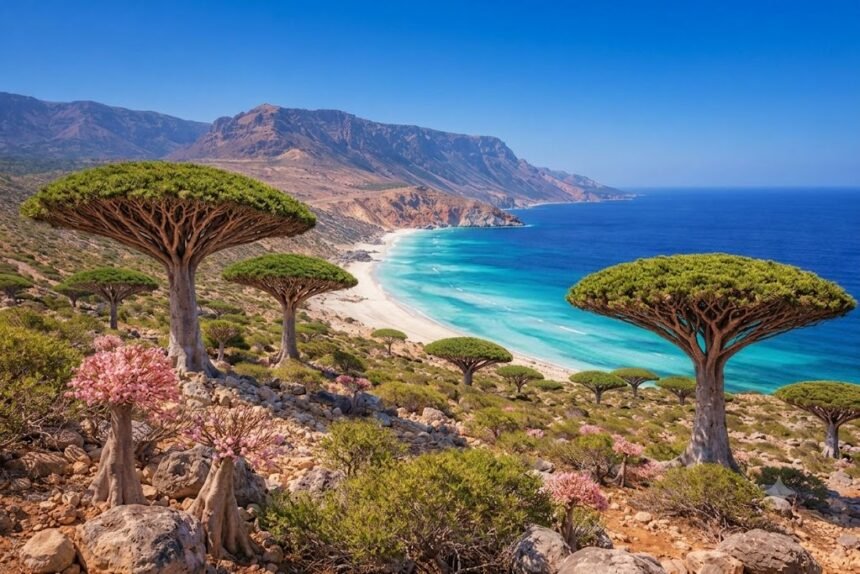
If you dropped someone blindfolded onto the Dixam Plateau, they’d probably panic and assume they’d been dumped on a distant, uninhabited planet.
You can’t really blame them. Surrounded by giant umbrella-shaped trees that bleed dark red sap, jagged limestone cliffs, and massive white sand dunes that plunge straight into turquoise waters, the place doesn’t look like anything else on Earth.
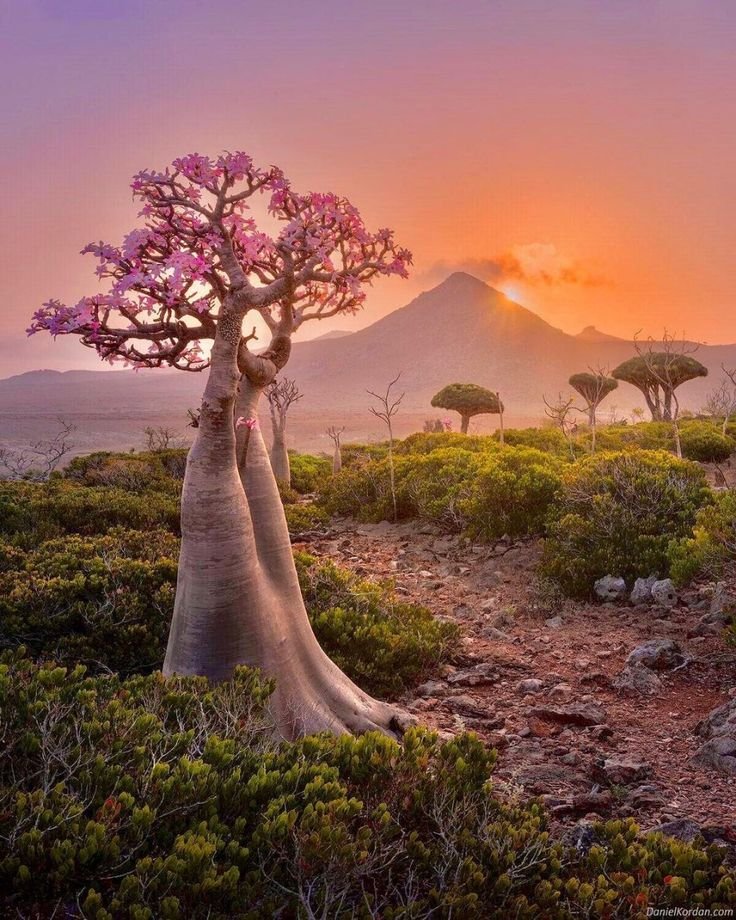
This is Socotra, a tiny island group sitting in the Arabian Sea, roughly 220 miles off the coast of Yemen. People often call it the “Galápagos of the Indian Ocean,” and for good reason. Socotra broke away from the African mainland millions of years ago. Left entirely on its own, evolution ran completely wild, crafting an ecosystem you won’t find anywhere else.
Yet, despite looking like a sci-fi movie set, Socotra remains one of the least-discussed travel spots on the planet. Here’s a look inside this surreal island and why it continues to blow the minds of anyone lucky enough to see it.
1. Plants That Seem to Defy Biology
What gives Socotra its alien reputation is its wild plant life. Over 37% of its 800+ plant species are endemic—meaning if you step off the island, they literally do not exist anywhere else in the wild.
- The Dragon’s Blood Tree: The undisputed star of Socotra. Shaped like giant, upside-down mushrooms or flying saucers, these trees evolved broad, dense canopies to trap ocean mist and shade their own roots from the scorching sun. When you cut into the bark, it bleeds a thick, crimson resin that locals have used for centuries as medicine, dye, and varnish.
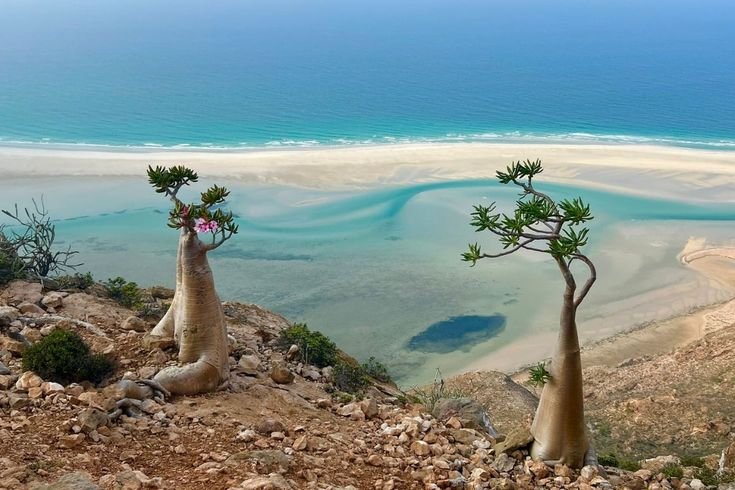
- The Desert Rose (Bottle Tree): This strange, swollen succulent stores massive amounts of water inside its trunk. It looks like a bloated, rocky bulb until it suddenly blooms with delicate pink flowers right out of the dry dirt.
- The Cucumber Tree: The only tree in the world that belongs to the cucumber and squash family, featuring a thick, pale trunk with a stubby little top.
2. Landscapes That Change Every Few Miles
Socotra isn’t just one single desert or forest. It crams an unreal variety of terrains into an island smaller than Rhode Island:
- The Dixam Plateau: The prime home of the Dragon’s Blood Trees, where deep, dramatic canyons cut right through high-altitude limestone plateaus.
- Arher Beach: Blindingly white sand dunes piled hundreds of feet high against dark granite cliffs, where cold freshwater streams flow straight down into the ocean.
- Detwah Lagoon: A peaceful, shallow bay filled with stingrays and sea turtles, framed by bright white sand.
3. Why Isn’t Everyone Talking About It?
Given how incredible it looks, why isn’t Socotra packed with luxury resorts and cruise ships?
The short answer comes down to extreme remoteness, complex regional politics, and strict protection efforts. While its physical isolation protected it from mainland conflicts, actually getting there requires deliberate planning, specific flight connections, and local eco-guides.
You won’t find big hotel chains, shopping malls, or paved highways here. Visitors camp under incredible star-filled skies, ride around in 4x4s over dusty dirt tracks, and rely on local Socotri hosts who have lived sustainably alongside this fragile environment for generations.
A Quick Note on Conservation: Socotra is a UNESCO World Heritage site, but it faces real challenges from climate change, soil erosion, and severe storms. Responsible, low-impact travel plays a huge role in supporting local communities and protecting tree nurseries for the future.
The Bottom Line
Socotra is a rare, living reminder of what happens when nature is left to do its own thing uninterrupted for millions of years. It’s definitely not an easy place to reach, but for anyone who makes the trip, it offers something that’s getting harder to find: a genuine, jaw-dropping sense of wonder.