


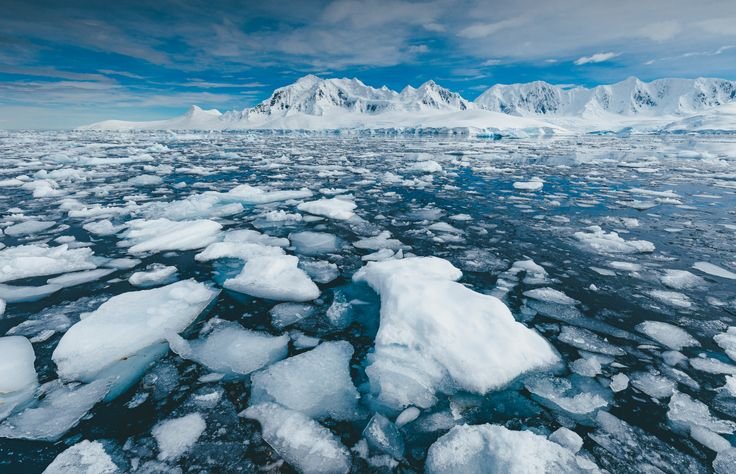
For most of human history, the Arctic was not a place anyone needed to argue about. It was ice — vast, hostile, essentially impenetrable, and offering nothing that the nations bordering it could practically access or exploit. The few indigenous communities who lived within it did so on terms the ice dictated, not the other way around. The great powers looked at the Arctic and saw a barrier. An ending. The place where the map ran out.
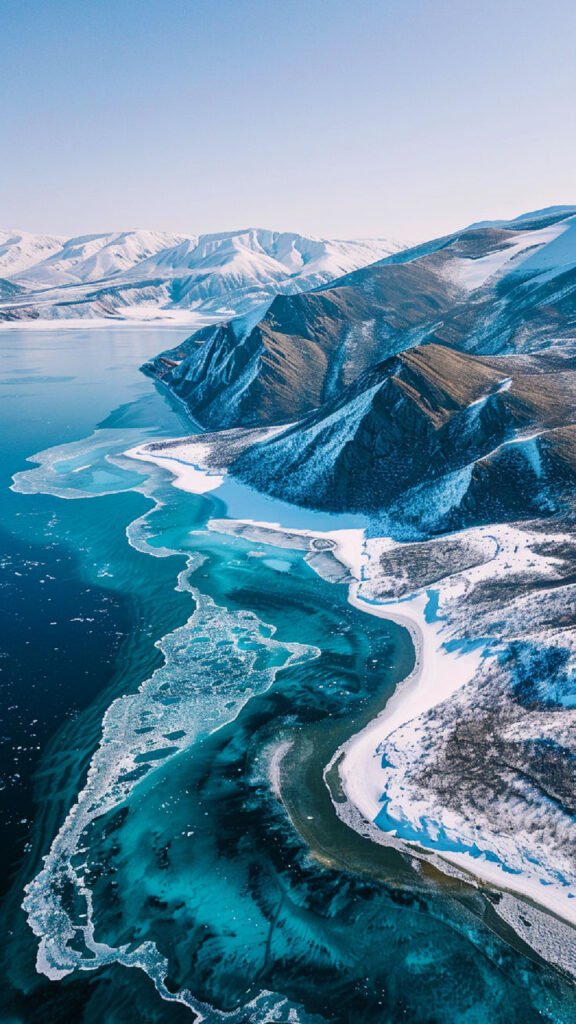
That world is gone. The Arctic is melting at four times the global average rate — faster than climate models projected even a decade ago. Where there was permanent ice, there is now seasonal water. Where there was seasonal water, there is now open ocean for months at a time. And where there is open ocean, there are shipping lanes, resource deposits, military positions, and the kind of territorial ambitions that have historically preceded conflict.
The world’s most inaccessible region has become, with a speed that has outpaced both diplomacy and international law, the world’s most contested frontier.
What Is Actually Under the Ice
The reason nations are fighting over the Arctic is not primarily strategic. It is geological. Beneath the Arctic Ocean floor lies an estimated 30% of the world’s undiscovered natural gas reserves and 13% of its undiscovered oil — figures from the United States Geological Survey that, when they were published, transformed Arctic policy in every nation with a claim to the region.
Beyond hydrocarbons, the Arctic seabed contains significant deposits of rare earth minerals — the elements essential to electric vehicle batteries, wind turbines, semiconductors, and the full range of technologies that the global energy transition depends upon. The same transition intended to reduce dependence on fossil fuels is, through its mineral requirements, creating a new competitive frontier in the same geography.
And then there are the shipping routes. The Northwest Passage — the sea route through the Canadian Arctic Archipelago connecting the Atlantic and Pacific oceans — is now navigable without icebreakers for significant portions of the year. The Northern Sea Route along Russia’s Arctic coast offers a journey from Europe to Asia that is 40% shorter than the Suez Canal alternative. For global shipping — an industry that moves 90% of world trade — the commercial implications are transformative. For the nations controlling those routes, the strategic implications are considerable.
The Five Players and What They Want
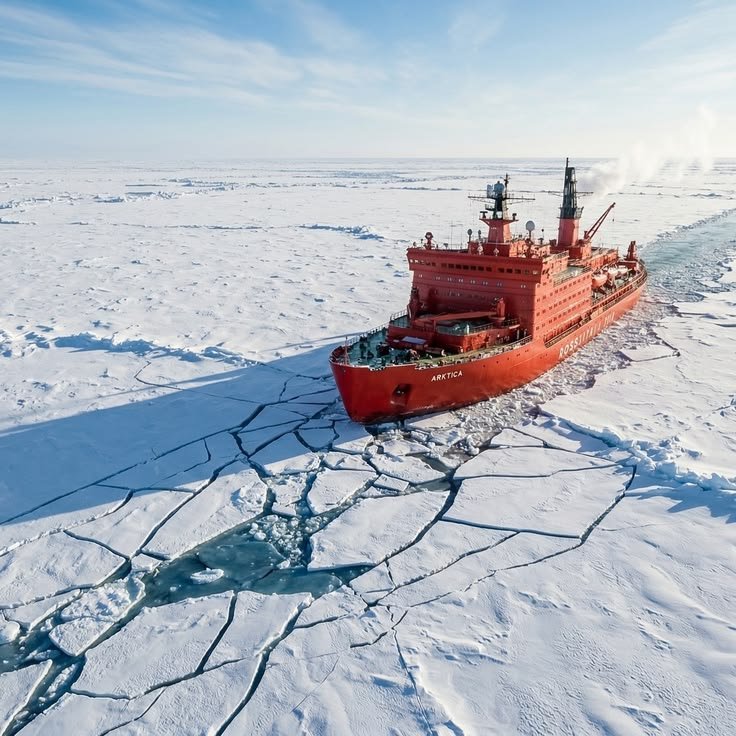
Russia holds the largest Arctic coastline of any nation — over 24,000 kilometres — and has moved with the most deliberate urgency to establish its position. Since 2007, when a Russian submarine planted a titanium flag on the Arctic seabed at the North Pole in a gesture dismissed as theatrical by Western governments but noted with extreme seriousness by Arctic strategists, Moscow has been systematically rebuilding its Soviet-era Arctic military infrastructure: reopening bases, commissioning nuclear-powered icebreakers, establishing the Northern Sea Route as Russian-administered territory, and filing extensive claims with the UN Commission on the Limits of the Continental Shelf asserting sovereign rights over an area of Arctic seabed roughly the size of Western Europe.
The United States has been, by its own admission, behind. The US possesses a single functional heavy icebreaker — the Polar Star, commissioned in 1976 — against Russia’s fleet of over 40, including several nuclear-powered vessels capable of year-round Arctic navigation. The recognition of this gap has driven bipartisan agreement in Washington to commission new icebreakers, expand the Alaskan military presence at bases including Elmendorf-Richardson and Fort Wainwright, and engage with Arctic governance with an urgency that was absent during the decades when the ice seemed permanent.
Canada faces the most politically complex Arctic challenge of any NATO member. The Northwest Passage runs through Canadian territorial waters — a position Canada asserts and the United States contests, maintaining that the route constitutes an international strait through which all vessels have the right of transit passage. This disagreement, politely managed for decades, grows more consequential with every year that the Passage becomes more navigable.
Norway and Denmark — through its autonomous territory of Greenland — hold significant Arctic positions and increasing strategic importance. Greenland, in particular, has become one of the most geopolitically discussed pieces of territory in the world: its rare earth deposits, its position athwart the North Atlantic, and its potential as a deep-water naval base have driven interest from the United States, China, and the European Union simultaneously. When former US President Donald Trump expressed interest in purchasing Greenland in 2019 — a suggestion dismissed at the time as eccentric — he was expressing, in his characteristically blunt style, a strategic logic that subsequent years have validated rather than contradicted.
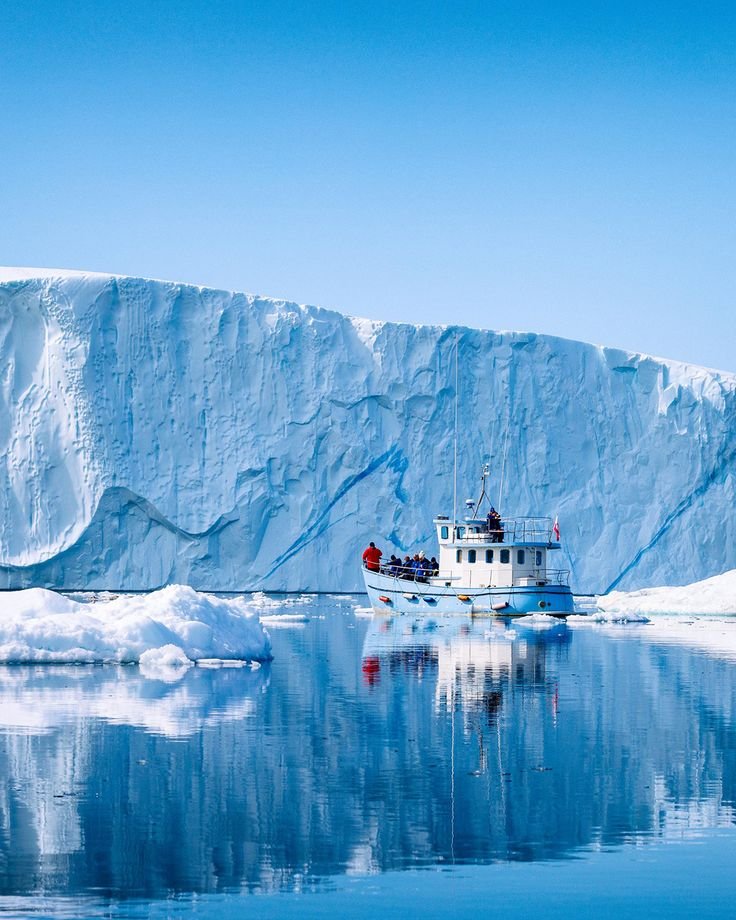
China is the Arctic’s most consequential non-Arctic actor. Designating itself a “near-Arctic state” in a 2018 white paper that the Arctic nations received with uniform alarm, Beijing has invested heavily in Arctic research, Arctic shipping infrastructure, and relationships with Arctic-adjacent nations. Chinese vessels transit the Northern Sea Route in growing numbers. Chinese investment in Greenlandic mining projects has been blocked by the Danish government on security grounds. China’s Arctic ambitions are not territorial in the conventional sense — it has no Arctic coastline — but commercial and strategic in ways that the existing Arctic governance framework was not designed to manage.
The Governance Gap Nobody Has Solved
The Arctic is governed, to the extent that it is governed at all, by the Arctic Council — an intergovernmental forum established in 1996 that includes the eight Arctic states and six permanent participant organisations representing indigenous peoples. The Arctic Council has produced valuable scientific cooperation and environmental agreements. What it has not produced is any binding mechanism for resolving territorial disputes, managing military competition, or governing the commercial exploitation of Arctic resources.
This matters because the legal framework underpinning Arctic territorial claims is itself contested. The United Nations Convention on the Law of the Sea — UNCLOS — provides the primary legal basis for extended continental shelf claims, but the United States has never ratified UNCLOS, creating a situation in which the world’s most powerful navy operates in Arctic waters under a legal framework it has declined to formally accept.
The Arctic Council was suspended for Russian participation in 2022 following the invasion of Ukraine — removing the primary diplomatic forum through which Arctic-specific tensions had been managed at precisely the moment those tensions began accelerating. The forum has partially resumed, but the cooperative architecture that held Arctic competition in relative check for three decades has been structurally weakened at the worst possible time.
The Indigenous Reality That Geopolitics Keeps Overlooking
The nations competing for Arctic resources and routes have almost universally framed their claims in the language of national interest, economic development, and strategic necessity. What is consistently absent from that framing is the experience of the four million people who actually live in the Arctic — including the Inuit, Yupik, Sámi, Nenets, and dozens of other indigenous communities whose relationship with the Arctic is not strategic but existential.
For these communities, the melting ice is not an opportunity. It is a catastrophe unfolding in real time. Permafrost thaw is destabilising the foundations of buildings, roads, and infrastructure. Traditional hunting and fishing grounds are changing faster than cultural adaptation can manage. The sea ice that provided travel routes, hunting platforms, and cultural connection for thousands of years is retreating on timescales that render accumulated indigenous knowledge — the most detailed environmental record of the Arctic that exists — increasingly inapplicable to current conditions.
The Arctic Council’s inclusion of indigenous permanent participants was, at its establishment, genuinely progressive. In practice, those voices have rarely determined outcomes in disputes where the economic interests of Arctic states are directly at stake.
What Comes Next
The Arctic is not going to re-freeze. The trajectories are established and the timescales, at the scale of human planning, are effectively permanent. What is not established is the governance architecture that will manage what the open Arctic becomes — and whether it will be managed through multilateral cooperation, bilateral agreement between the major powers, or the kind of competitive assertion that produces conflict.
The optimistic scenario — a revived Arctic Council, new binding legal frameworks, cooperative resource development with genuine benefit to indigenous communities — requires a level of multilateral trust that the current geopolitical environment makes difficult to sustain.
The realistic scenario is a continuation of what is already happening: incremental military positioning, competing territorial claims processed through international bodies too slow and too underfunded to keep pace, commercial activity accelerating ahead of the regulatory frameworks meant to govern it, and indigenous communities adapting to changes they did not cause and cannot reverse.
The Arctic is open. What the world does with that fact will say more about the international order of the 21st century than almost any other decision currently being made or avoided.
More global affairs, technology, and analysis at Write Matrix