

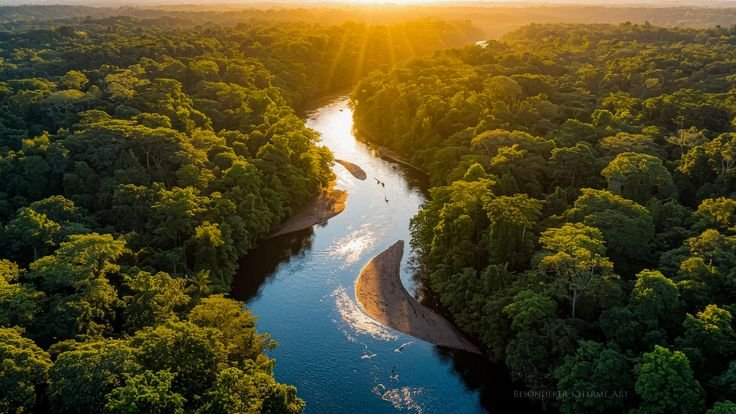
The Amazon gets the headlines. It gets the documentaries, the climate summits, the celebrity endorsements, and the satellite images showing deforestation advancing in real time across a landscape that the world has, rightly, decided it cannot afford to lose.
But there is another rainforest. Older than the Amazon. More biodiverse per square kilometre than almost any ecosystem on earth. Home to species found nowhere else — not in the Amazon, not in the Congo Basin, not anywhere on the planet except this particular island in Southeast Asia. And it is disappearing faster, proportionally, than any other primary forest in the world.
Borneo’s rainforest is 130 million years old. The Amazon, by comparison, is approximately 55 million years. Borneo existed as a forested landmass before the dinosaurs were extinct, before the continents had finished arranging themselves into their current configuration, before almost every other terrestrial ecosystem currently on earth had come into existence. What grows in Borneo’s interior today is not a young forest regrowing from disturbance. It is the continuation of something ancient beyond ordinary comprehension.
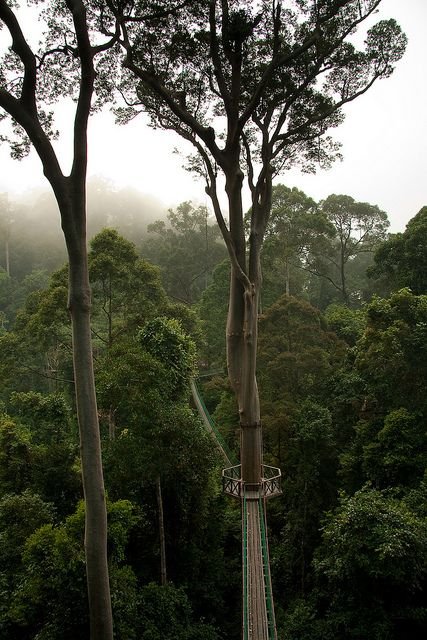
And at its heart, in the Malaysian state of Sabah on the island’s northern tip, lies Danum Valley — 438 square kilometres of primary lowland dipterocarp rainforest that represents one of the last intact fragments of what Borneo once was, and what the world is in the process of losing.
What Lives Here That Lives Nowhere Else
The biodiversity of Danum Valley is not a statistic that can be adequately absorbed in a single reading. It must be approached in parts.
Borneo pygmy elephants — the smallest elephant species in the world, found only on this island, numbering fewer than 1,500 individuals — move through Danum Valley’s river corridors in family groups. They are smaller than their Asian relatives and noticeably less aggressive, with a quality of relative tameness that researchers attribute to their long isolation from human contact. Seeing them in the wild, in forest, at their own pace and on their own terms, is an experience that no wildlife sanctuary or zoo visit approximates.
Orangutans — the only great ape found outside Africa — inhabit Danum Valley’s canopy in numbers that make genuine wild sightings possible for the patient visitor. Borneo’s orangutan population has declined by more than 50% in the last 60 years, driven by palm oil plantation expansion that has converted primary forest into agricultural monoculture at a rate that continues despite international pressure. The individuals moving through Danum Valley’s protected canopy are not habituated to tourists. They are wild animals living wild lives, occasionally visible from the forest trails below.
Clouded leopards, sun bears, proboscis monkeys, flying squirrels, rhinoceros hornbills, 340 species of birds, 110 species of mammals — the inventory continues well past the point where the numbers become individually meaningful. What they collectively represent is an ecosystem so complex and so interconnected that ecologists describe Danum Valley not as a collection of species but as a living machine — one that has been running, self-sustaining and self-regulating, for longer than most of the world’s mountain ranges have existed.
The Forest at Night
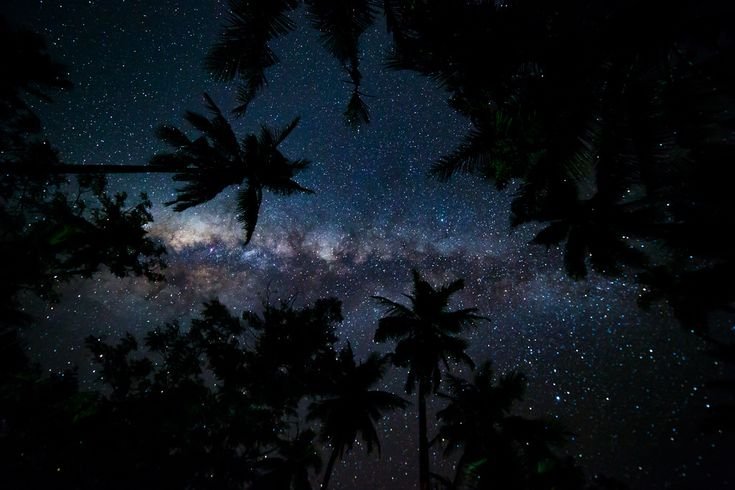
Danum Valley is, unusually for a wildlife destination, as extraordinary after dark as it is in daylight. The nocturnal shift — when the diurnal species retire and the forest’s night infrastructure activates — produces a completely different acoustic and visual landscape from the one occupied during the day.
Walking the forest trails at night with a guide and a torch reveals a world operating in parallel to the daytime one: flying lizards gliding between trees on extended ribs that function as wings; tarsiers — ancient primates with eyes so large relative to their skull size they cannot move in their sockets — clinging to branches at eye level; bioluminescent fungi producing a faint, cold light from the forest floor; the calls of animals that daylight never brings close enough to identify.
The experience of standing in 130-million-year-old primary rainforest at two in the morning, with the forest alive and audible in every direction, is not one that can be replicated or prepared for. It simply happens to you.
The Crisis Happening in Slow Motion
Borneo has lost more than 50% of its primary forest in the last 50 years. Palm oil — used in an estimated 50% of packaged consumer products globally, from biscuits to shampoo to biodiesel — has been the primary driver of that loss, converting lowland primary forest into agricultural monoculture at a pace that has made Borneo the fastest-deforesting region on earth across multiple decades.
Danum Valley is protected. But protection in Borneo is a relative term — one that exists within a political and economic context of plantation interest, logging concessions, and a global commodity market that continues to create the financial incentive for forest conversion. The buffer zones around Danum are themselves partially compromised. The wildlife corridors that allow species to move between protected areas are increasingly fragmented.
Visiting Danum Valley in 2026 is, simultaneously, an extraordinary travel experience and an act of bearing witness. The Borneo Rainforest Lodge — the only accommodation within the valley, managed with genuine conservation commitment — directs a portion of its revenue directly into research and protection programmes. Choosing to stay there is not a neutral act. It is a contribution, modest but real, to the continued existence of what you are visiting.
This is not a guilt trip. It is simply the context in which Danum Valley currently exists — and which every visitor, by going, becomes part of.
How to Go
Danum Valley is reached via Lahad Datu in Sabah, Malaysian Borneo — served by domestic flights from Kota Kinabalu, which connects internationally to Kuala Lumpur, Singapore, and several Chinese cities. From Lahad Datu, the Borneo Rainforest Lodge operates transfers into the valley — a journey of approximately 70 kilometres through a landscape that transitions, along the road, from plantation to secondary forest to the primary canopy of the reserve itself.
The lodge operates guided walking, night drives, river trips, and canopy walkway experiences, all led by local guides whose knowledge of the forest is without parallel. Minimum stays of two nights are recommended — not by the lodge but by the forest itself, which takes time to reveal. Three to four nights allows the rhythm of the place — early morning walks, afternoon rest during the heat, evening and night activities — to become something close to natural.
May to October is the drier season in Sabah, though Borneo does not have a dry season in any absolute sense. Rain is part of the experience. It is also, in a 130-million-year-old rainforest, entirely appropriate.
Discover more hidden natural wonders and global travel at Write Matrix