


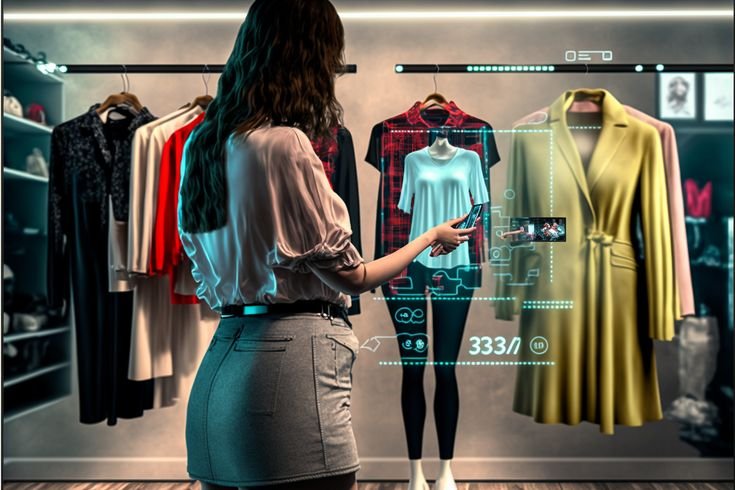
You opened the app to check a price. Twelve minutes later, you’ve bought three things you didn’t plan to, abandoned a fourth at checkout, and somehow added a fifth to a wishlist you’ll never revisit. You put your phone down feeling vaguely unsatisfied — not quite guilty, not quite pleased.
This wasn’t an accident. Every second of that experience was engineered.
Inside every major shopping app — Amazon, SHEIN, TikTok Shop, Myntra, Flipkart — there is a live, invisible war being fought over one of the most valuable pieces of real estate on earth: the four seconds between when your thumb stops scrolling and when your brain decides whether to buy. Welcome to the neurological frontline of modern ecommerce.
The 4-Second Window Is Not a Metaphor
Neuroscientists studying consumer behaviour have long understood that purchasing decisions are rarely rational. But what the last decade of mobile data has confirmed is something more precise and more alarming: the average consumer’s intent to purchase is formed within 4 seconds of encountering a product on a mobile screen — often before the conscious mind has registered what it is looking at.
This is because the brain’s limbic system — responsible for emotion, memory, and reward — processes visual information roughly 60,000 times faster than the prefrontal cortex, which governs logic and deliberation. Shopping apps are designed, at a molecular level, to engage the limbic system first and the rational mind never.
How They Do It: The Architecture of Impulse
The tools are not secret. They are, however, relentless.
Variable reward loops — borrowed directly from slot machine psychology — are the backbone of every infinite scroll feed. You don’t know if the next product will be irrelevant or irresistible. That uncertainty triggers a dopamine response identical to the one produced by gambling. Your thumb keeps moving because your brain is chasing the hit.
Scarcity signals — “Only 2 left,” “18 people viewing this now,” “Deal ends in 09:42” — are precision instruments designed to activate the amygdala, the brain’s threat-detection centre. Once the amygdala fires, the prefrontal cortex is partially suppressed. You are, quite literally, less capable of rational decision-making the moment a countdown timer appears on screen.
Social proof cascades — star ratings, review counts, “bestseller” badges — exploit the brain’s deep heuristic: if others have chosen this, it is safe for me to choose it too. This isn’t peer pressure. It is an evolutionary shortcut that shopping apps have weaponised at scale.
Friction removal — one-tap checkout, saved cards, biometric payment — is the final blow. The brain’s last line of defence is the mild discomfort of entering card details. Remove that, and the gap between desire and transaction collapses entirely.

The Consumer Is Not Powerless — But They Are Outgunned
Understanding the mechanics does offer some defence. Behavioural economists suggest simple interventions: adding items to cart and waiting 24 hours, disabling one-tap purchase, turning off push notifications, setting app time limits. These work — not because they make you smarter, but because they reintroduce the friction that app designers have spent billions removing.
But the honest assessment is sobering. You are a single human brain, making decisions in real time, against teams of neuroscientists, behavioural psychologists, and machine learning engineers whose sole metric of success is the speed at which your thumb becomes a transaction.
Why This Matters Beyond the Receipt
The stakes extend past your bank balance. Ecommerce platforms optimised for neurological impulse are contributing to record levels of consumer debt, accelerating overproduction in fast fashion and electronics, and generating an estimated 5 billion returned parcels annually — most of which are destroyed rather than restocked.
The four-second window is not just a design choice. It is an economic engine, a psychological experiment, and increasingly, an ethical question — one that regulators across the EU and UK are beginning to ask out loud.
The next time your thumb stops scrolling, pause for five seconds. Not because it will always stop you from buying. But because those five seconds are the only ones that belong entirely to you.