


Every generation of travel writers eventually reaches for the phrase “the last untouched place on Earth” and applies it somewhere that, on closer inspection, isn’t quite that anymore. Papua New Guinea might be the rare case where the phrase genuinely holds up. This is a country of 850 languages, more than any other nation on the planet, where Highland tribes had no contact with the outside world until the 1930s, and where travel still runs on relationships and local knowledge rather than infrastructure most destinations take for granted.
A Level of Diversity That Has No Real Comparison
Papua New Guinea’s linguistic diversity alone sets it apart from anywhere else on Earth, a direct consequence of geography: rugged, heavily forested mountain ranges kept tribes isolated from one another for centuries, allowing hundreds of distinct languages, belief systems, and traditions to develop independently within a relatively compact landmass. That isolation produced something increasingly rare globally, living cultures that continue practising traditional ways of life largely on their own terms, including initiation ceremonies and customs that predate sustained outside contact by centuries rather than performing a curated version of them for visitors.
The Sing-Sing: A Spectacle With No Real Equivalent
If one event captures what makes Papua New Guinea genuinely singular, it’s the sing-sing, and the Goroka Show in particular, staged each September around Independence Day, regularly described as one of the greatest cultural spectacles on Earth. More than a hundred tribal groups converge in full ceremonial bilas, traditional dress and elaborate body paint and feather work, performing simultaneously across the showgrounds, each group representing its own distinct visual and musical tradition rather than a generalised “tribal” aesthetic. The Mount Hagen Cultural Show offers a comparable, slightly smaller-scale version of the same phenomenon. Neither event was built for tourists, they’re genuine cultural gatherings that happen to welcome outside visitors, a distinction that shapes the entire experience.
Diving That Rivals the World’s Best, Without the Crowds
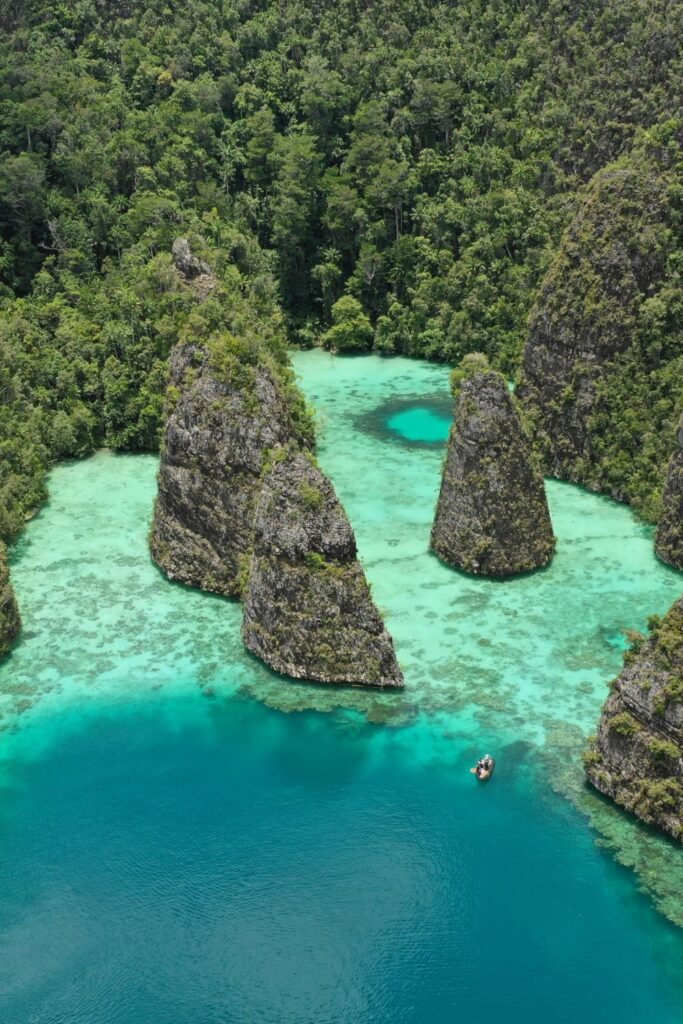
Beneath the surface, Papua New Guinea sits inside the Coral Triangle, the global epicentre of marine biodiversity, with Milne Bay Province in particular producing diving conditions that compete directly with Palau and Raja Ampat for quality, minus anything resembling their visitor numbers. The Bismarck Sea adds its own reputation among serious divers, remote reef systems reached mostly by liveaboard given the near-total absence of coastal tourism infrastructure in the surrounding regions.
The Kokoda Track: History Written Into the Jungle
For travellers drawn to history rather than diving, the Kokoda Track offers something genuinely different, a physically demanding 96-kilometre jungle trek following the exact path Australian and Japanese forces fought over during a brutal World War II campaign. It carries specific, weighted significance for Australian and Papua New Guinean people in particular, and completing it, most trekkers take between four and twelve days depending on fitness and pace, functions as much as a historical pilgrimage as a physical challenge.
What Travel Here Actually Requires
It’s worth being direct about the reality behind the romance: Papua New Guinea carries a genuinely elevated travel risk profile in 2026, tribal conflict in certain regions, unreliable public transport, limited healthcare infrastructure outside major towns, and real safety considerations in Port Moresby specifically. None of this makes the country unvisitable, most trips proceed without incident, particularly with an experienced guide, but it does mean this isn’t a destination suited to improvised, independent travel. Access to Highland communities and tribal visits specifically depends on local knowledge, arranged in advance through people who understand clan boundaries and protocols that even other Papua New Guineans navigate carefully. Flying between regions is consistently recommended over road travel, and tourism infrastructure concentrates around established hubs, Goroka, Mount Hagen, and the Sepik River region, where local guides and pre-arranged logistics make cultural visits both safer and considerably more meaningful than an unplanned arrival ever could be.
Why “Untouched” Doesn’t Mean “Unwelcoming”
The honest guides written by people who actually operate tours here are consistent on one point: community visits, when planned respectfully and arranged through proper local contacts, rank among the safest and most rewarding parts of travelling in Papua New Guinea, not the riskiest. The distinction that matters is between showing up uninvited and travelling with people who hold genuine relationships with the communities being visited, a difference that shapes not just safety, but whether an encounter feels like intrusion or exchange.
Why It Still Earns the Superlative
Papua New Guinea demands more from its visitors than almost any other destination on Earth, careful planning, real physical and logistical commitment, and genuine humility toward cultures that have never needed outside validation to remain intact. What it offers in return is proportional: linguistic and cultural diversity with no real global equivalent, diving that holds its own against the best reefs on the planet, and Highland communities still living according to traditions that predate the modern travel industry entirely. For travellers willing to meet those demands, Papua New Guinea remains one of the very few places left where “last untouched frontier” isn’t simply marketing language, it’s an accurate description of what’s actually still there.