


Sportswear has changed dramatically over the past few decades. Athletic clothing and footwear were once designed almost entirely around performance, while everyday fashion belonged to a completely different world. Today, those boundaries have almost disappeared.
A pair of running shoes can become part of a weekend outfit. A football-inspired jacket can work just as well on city streets. And a sneaker originally designed for sport can eventually become a cultural icon.
Few brands illustrate that evolution quite like Puma.
For more than 75 years, Puma has built its identity around the relationship between sport, performance and culture. Today, the brand spans football, running, training, basketball, golf, motorsport and Sportstyle, creating products that can move between athletic environments and everyday life.

Performance Still Comes First
While fashion has become an important part of the sportswear conversation, Puma continues to put performance technology at the center of its product development.
Running is a good example.
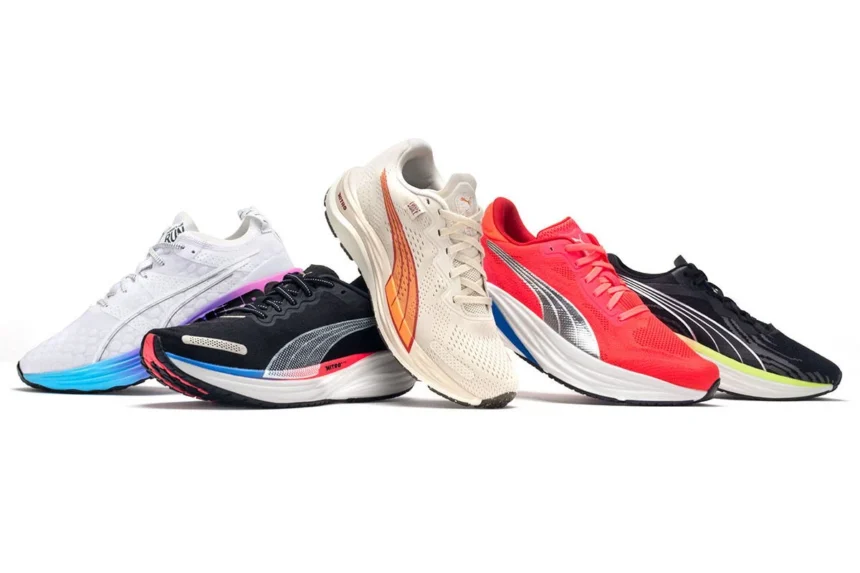
The brand’s NITRO™ technology has become an important part of its running range, with Puma describing the foam as lightweight and responsive. In 2026, Puma also announced a partnership with Shincell to research the next generation of NITRO™ running foam technology.
That focus on development is reflected across Puma’s running collection, which includes shoes designed for everyday short runs, 5–10 km distances, long-distance running and trail running.
The idea is simple: different activities require different kinds of footwear.
And increasingly, consumers expect sports brands to understand those differences.
When Athletic Design Becomes Everyday Style
The interesting story around Puma, however, isn’t only happening on running tracks or football pitches.
The brand’s Sportstyle range demonstrates how performance-inspired design can become part of everyday fashion. Puma’s current Sportstyle direction includes low-profile silhouettes, archive-inspired footwear and updated versions of familiar classics. The Suede, Speedcat and other styles continue to connect the brand’s sporting heritage with contemporary streetwear.
That crossover has helped make Puma relevant to people who may not consider themselves serious athletes.
A sneaker can be chosen because it performs well, but it can also be chosen because it works with a particular outfit or captures a certain era of fashion.
That versatility is one of the defining characteristics of modern sportswear.
Heritage Meets a New Generation
One of Puma’s biggest assets is its archive.
Instead of constantly moving away from its past, Puma has increasingly looked back at older designs and reinterpreted them for today’s audience. The return of the PUMA Homura in 2026 is one example, bringing an early-2000s running silhouette back with a contemporary presentation.
The same approach can be seen in the brand’s ongoing work around the Suede and Speedcat.
It creates an interesting balance. The designs can feel nostalgic to people who remember them while appearing fresh to consumers discovering them for the first time.
Fashion rarely moves in a straight line. Sometimes the future is hiding in the archive.
Sport Is Becoming More Personal
Another reason Puma remains interesting is the sheer variety of ways people now participate in sport.
Not everyone is training for a marathon or competing professionally. Some people run for their mental reset. Others train after work, play football at weekends, walk every day or simply want comfortable clothing that fits an active lifestyle.
Puma’s presence across running, football, training, basketball, golf and motorsport reflects this broader relationship between people and sport.
The brand’s 2026 product launches also show how these categories increasingly overlap. From NITRO™ running footwear to HYROX-related training products and football boots incorporating NITRO™ technology, Puma continues to develop products across different performance environments.

More Than Just a Sports Brand
Perhaps the most interesting thing about Puma is that the brand doesn’t have to choose between performance and style.
A runner may care about cushioning and responsiveness. A football player may focus on grip and speed. Someone shopping for a casual sneaker may care more about shape, color and how easily it works with their wardrobe.
All of those consumers can find something within the wider Puma universe.
That is the real evolution of sportswear. People no longer necessarily change their style when they leave the gym or finish a workout. Athletic influences have become part of everyday dressing.
And Puma has spent decades operating right at that intersection.
From the track to the football pitch, from the gym to the city street, Puma continues to show that sportswear doesn’t have to stay inside the world of sport.
Sometimes, the most interesting part of the game begins after the whistle blows.
Explore the latest Pumacollections and discover where performance meets everyday style.