


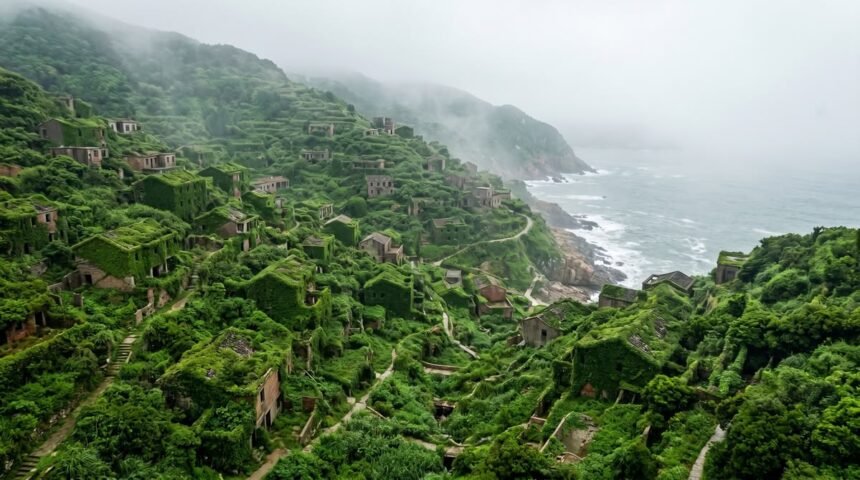
There are places in the world where the loudest thing you can hear is the wind.
No traffic. No restaurant music spilling onto a street. No crowds stopping every few metres to take photographs. Just empty houses, old roads and landscapes that seem to have continued without the people who once lived there.
These forgotten villages and abandoned settlements offer a very different kind of travel experience. They are not places you visit for a packed itinerary. You go because you want to slow down, look around and imagine what life might have been like before the streets fell silent.
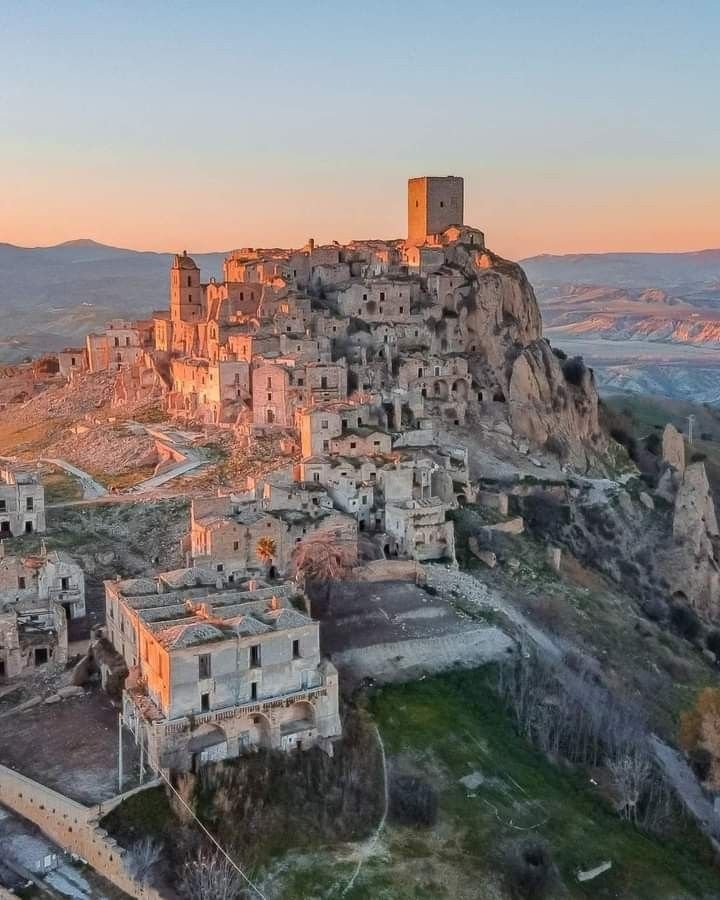
Craco, Italy: A Village Left on the Hill
In southern Italy, the abandoned village of Craco sits dramatically on a rocky hill in Basilicata.
People lived here for centuries, but landslides, earthquakes and other problems eventually made the historic centre unsafe. Residents gradually moved away, leaving behind stone houses, narrow streets and a village that now feels frozen in another era.
Craco has appeared in films, which has brought some attention to the settlement, but much of its appeal comes from its setting. The surrounding countryside stretches out beneath the ruins, and from certain points, the village looks almost like a stone ship stranded above the landscape.
It is a reminder that even places built to last can eventually become vulnerable to the ground beneath them.
Kayaköy, Türkiye: A Village Without Its Residents
Near Fethiye in southwestern Türkiye lies Kayaköy, a hillside settlement of abandoned stone houses.
The village was once home to a Greek-speaking Christian community. Following the population exchange between Greece and Türkiye in the 1920s, its residents left, and the settlement was never repopulated in the same way.
Today, hundreds of empty buildings cover the hillside. Roofs have disappeared from many houses, plants have grown through walls and pathways wind between weathered stone structures.
Unlike a conventional historical attraction, Kayaköy feels unusually open and exposed. You can walk through its streets and see how close the homes once stood to one another, making the absence of people even more noticeable.
Kolmanskop, Namibia: When the Desert Moves In
Some abandoned places are slowly reclaimed by forests. Kolmanskop, in Namibia, has been taken over by something far more relentless: sand.
The settlement grew after diamonds were discovered in the Namib Desert in the early twentieth century. At its height, it had homes, a hospital, a school and other facilities. When diamond production declined and richer deposits were found elsewhere, residents eventually left.
Today, sand fills rooms that once held furniture and families.
Walking through the abandoned buildings, you can see doors opening onto dunes and windows framing nothing but desert. It is an unusual combination of architecture and landscape, and one of the clearest examples of how quickly nature can reshape a human settlement.
Houtouwan, China: A Village Beneath the Green
On Shengshan Island, off China’s eastern coast, another abandoned settlement has taken on a completely different appearance.
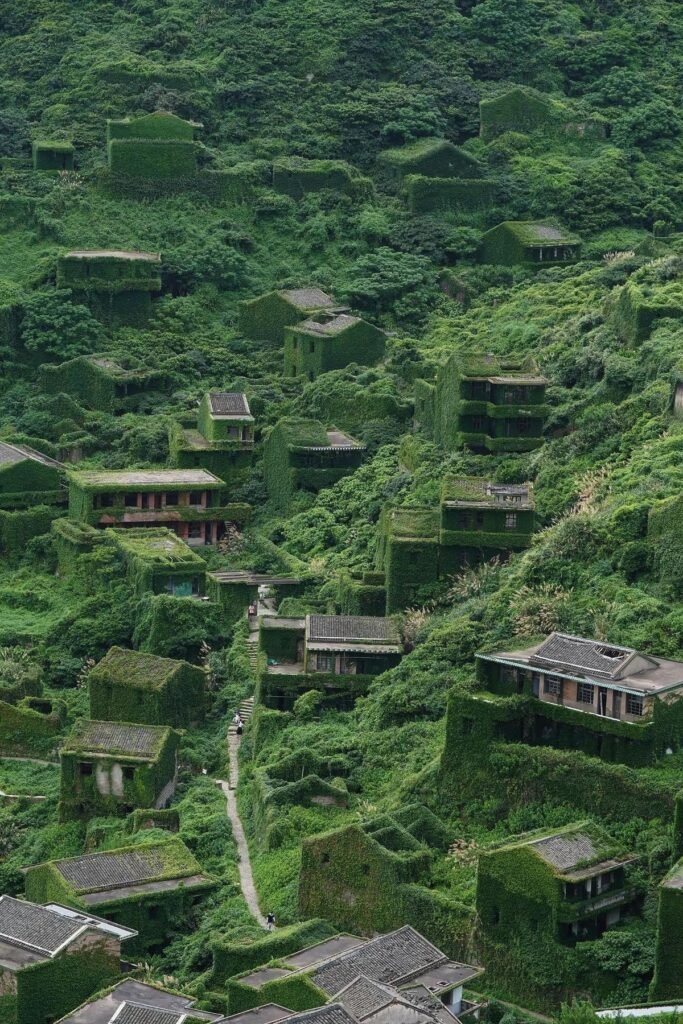
Houtouwan was once a fishing village, but residents gradually moved away, partly because of the settlement’s difficult access and limited services. Over time, vegetation began covering the houses.
Vines climb walls. Trees grow through windows. Greenery hangs over stairways and rooftops.
Photographs have made Houtouwan famous, but seeing photographs alone can be misleading. The village is not simply a fantasy landscape untouched by people; it is an abandoned community with a real history and environmental pressures behind its appearance.
Why Do We Keep Searching for Forgotten Places?
Abandoned villages are fascinating because they make history feel physical.
A museum can tell you that people once lived somewhere. An empty kitchen, a staircase leading nowhere or a faded doorway can make that fact much easier to imagine.
There is also something appealing about travelling somewhere without a long list of attractions. These places encourage a slower pace. You notice details that would be easy to miss elsewhere—the shape of a roof, an old road disappearing into grass, a view that explains why someone decided to build a home there in the first place.
But visiting abandoned places comes with responsibility. Some structures are unstable, some sites are protected and others are on private land. Travellers should follow local rules, avoid entering unsafe buildings and resist the urge to remove souvenirs.
The Beauty of Places That Fell Silent
The world’s forgotten villages are not simply beautiful backdrops for photographs. Each one represents a combination of migration, economics, natural disasters, changing industries or political events.
That is what makes these journeys worthwhile.
You arrive expecting ruins and discover stories instead.
In a world where popular destinations can feel increasingly crowded, these quiet corners offer another way to travel—not necessarily farther, but more slowly. They remind us that landscapes change, communities move and even the busiest places can eventually become part of history.
Sometimes, the most memorable journey is the one that takes you somewhere where almost nobody is going.