

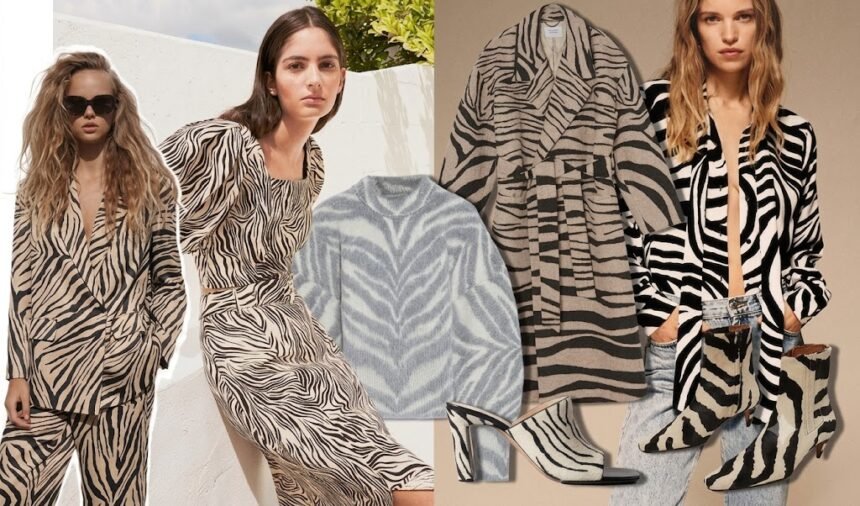
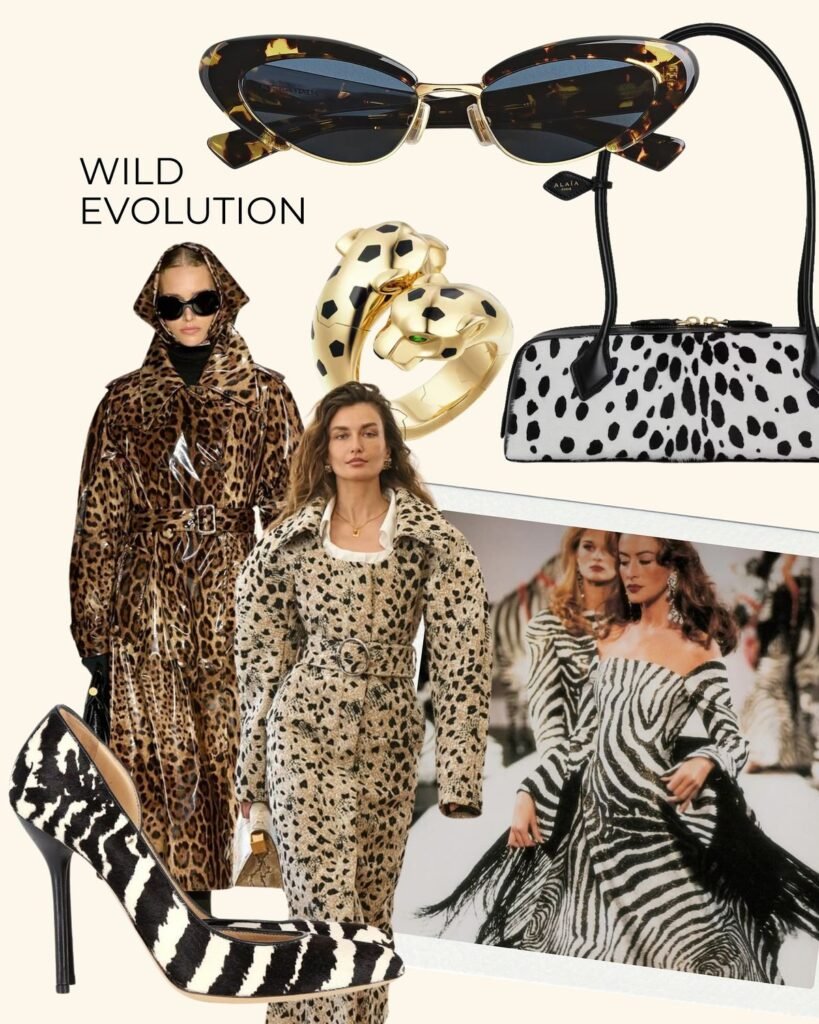
Leopard print spent so long as fashion’s default animal motif that it basically became a synonym for the category itself. That’s no longer accurate. Runway and street style coverage through 2026 keeps landing on the same observation: animal print has shed its loud, costume-adjacent reputation and turned into a polished, wearable signature, and the print doing that work has fractured into a genuinely wide field, zebra, tiger, cow, deer, Dalmatian, tortoiseshell, each carrying its own distinct mood rather than functioning as a leopard substitute.
Zebra Takes the Lead for 2026
Zebra has emerged as the season’s most confident graphic statement, showing up on Spring/Summer 2026 runways in structured power suits and neutral denim sets, a genuinely different context than the print’s earlier, more casual associations. Its appeal lies in contrast, zebra reads as bold and architectural rather than soft or decorative, which is exactly why stylists increasingly treat it as an anchor piece rather than an accent, a full jacket or trouser rather than a small accessory. The recommended approach for wearing it well stays consistent across most style guides: let zebra carry the outfit, then balance it with tonal, solid layers rather than competing prints.
Tiger Replaces Leopard as 2026’s Primary Feline Print
Where leopard print built its reputation on a soft, blended spot pattern, tiger stripes bring something more graphic and, per most trend coverage, more dramatic to Fall/Winter 2026 collections, frequently appearing on trousers and statement coats in olive, khaki, brown, and navy pairings that lean sophisticated rather than flashy. Some trend forecasters describe this shift explicitly as tiger stepping into leopard’s former role as fashion’s default feline print, driven partly by a broader move toward patterns inspired by less commonly referenced animals, a rainforest tiger motif reads as more distinctive than another round of the same spotted leopard design.
Cow Print Grows Up
Cow print has had the most interesting trajectory of the bunch. It arrived a few years back as a novelty, western-rodeo aesthetic, then spent 2025 and into 2026 maturing into something considerably more refined, smoother, more organic black-and-white patterns on calf-hair bags and structured coats, described by some trend watchers as evolving from “rustic rodeo” into “prairie-inspired Rodeo Drive.” At the same time, several stylists now recommend using cow print in smaller doses specifically, accessories, hats, belts, boots, rather than full statement pieces, treating it as a graphic accent rather than a dominant print the way it briefly was. Both readings agree on the underlying shift: cow print has moved from costume-y western signal to something genuinely wearable in a polished daily wardrobe.
The Real Shift Is Abstraction, Not Just Variety
Beyond the specific animals in rotation, the more significant change running through 2026’s whole animal print category is a move away from strict, literal realism. Designers are favouring blurred, abstract, or hybrid interpretations, unusual colourways, softened edges, stylised patterns rather than exact replicas of a zebra’s or tiger’s actual coat. That shift matters because it’s part of what’s letting animal print register as a genuine neutral this year rather than a loud statement print, a muted, burgundy-toned leopard or a softened, painterly zebra pattern simply reads differently than a high-contrast, literal version of the same animal.
How to Actually Wear This Without It Reading Dated
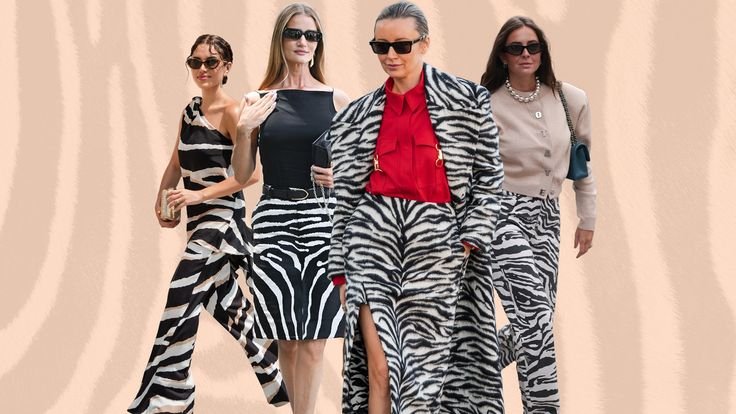
The styling consensus across 2026 coverage is remarkably consistent regardless of which specific print is involved: pick one print per outfit and let everything else stay solid and structured. Combining zebra stripes, leopard spots, and tiger patterns in a single look reads as costume rather than current, while a single animal-print piece, a jacket, a pair of trousers, a bag, paired with simple denim, a plain top, or a tailored blazer lands as considered rather than overdone. Colour matters too, harsh black-and-tan leopard contrast has aged out in favour of warmer, muted tones, burgundy, camel, chocolate brown base colours that feel current rather than reminiscent of an earlier decade’s version of the same print.
What This Means for Building a Wardrobe
The practical takeaway for 2026 is that animal print no longer means committing to one signature pattern for the rest of your closet’s life. Zebra offers graphic boldness for anyone wanting a structural, slightly architectural piece. Tiger delivers drama with more sophistication than its stripes might suggest, especially in muted colourways. Cow print, worn in smaller doses, adds texture and a slightly playful edge without overwhelming an outfit. None of this displaces leopard entirely, it remains a legitimate neutral in its own right, but 2026’s animal print category has genuinely expanded past leopard as the automatic default, giving anyone building a wardrobe considerably more range to work with than a single spotted print ever offered.