


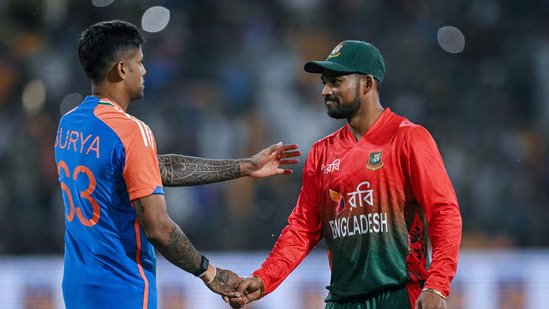
In a rare and dramatic twist in international cricket, Bangladesh has announced it will not travel to India to play its matches in the ICC Men’s T20 World Cup 2026, co-hosted by India and Sri Lanka next month. The Bangladesh Cricket Board (BCB) cited player safety concerns and escalating political tensions as central reasons for this unprecedented withdrawal.
This decision — just weeks before one of cricket’s biggest global events — has sparked intense debate across sporting, diplomatic, and fan communities. Here’s a closer look at the causes, reactions, and broader implications.
What Triggered the Decision?
The immediate catalyst for Bangladesh’s move was the controversial release of star pacer Mustafizur Rahman from his Indian Premier League (IPL) contract. Mustafizur, bought by the Kolkata Knight Riders for a record fee, was released after the Board of Control for Cricket in India (BCCI) reportedly instructed the franchise to terminate his contract. This action was tied to rising tensions following violent incidents in Bangladesh that also sparked sensitivities in India.
Bangladesh’s sports ministry and the BCB held an emergency meeting and concluded that if a Bangladeshi player could not be assured safety in Indian cricketing environments, then sending the entire national team to India posed a serious risk.
In response, the BCB formally requested the International Cricket Council (ICC) to relocate Bangladesh’s scheduled matches to a neutral venue, with Sri Lanka emerging as a preferred alternative host.
Safety Concerns and Political Underpinnings
While player safety was the official reason, the decision cannot be viewed in isolation from broader diplomatic tensions between Bangladesh and India. Relations between the neighbouring nations have been strained in recent months — influenced by political developments, social unrest in Bangladesh, and associated reactions across the border.
Bangladesh’s sports adviser, Asif Nazrul, publicly supported the decision, framing it not only as a security measure but also as a stand against what he described as discrimination, particularly in the handling of Mustafizur’s IPL contract situation.
Former Pakistan captain Shahid Afridi also weighed in, backing Bangladesh’s choice and urging cricket authorities like the ICC to address the underlying concerns rather than dismiss them.
This intersection of sport and geopolitics underscores how international cricket — especially marquee events like the T20 World Cup — can reflect tensions beyond the boundary ropes.
Reactions from the Cricket World
Responses have been mixed across cricket’s global community:
- Supporters of Bangladesh’s stance argue that no team should compromise player safety due to external circumstances. These voices emphasize that sports governing bodies must uphold the well-being of players above commercial or competitive interests.
- Critics, however, see the move as a dramatic escalation that threatens the tournament’s integrity. Some commentators argue that political grievances should be handled through diplomacy, not sporting boycotts, warning that this could set a precedent where on-field competitions are overly influenced by off-field disputes.
Meanwhile, other cricket communities have called for the ICC to find a balanced solution — possibly by agreeing to venue changes for Bangladesh without disrupting the broader World Cup schedule.
Implications for the T20 World Cup and Beyond
Bangladesh’s decision poses logistical and symbolic challenges:
- Tournament scheduling impacts: If matches are shifted to Sri Lanka, the ICC and co-hosts must adapt fixtures, broadcasting arrangements, and fan travel plans on short notice.
- Cricket diplomacy: Long-standing rivalries and political strains now risk overshadowing the spirit of the sport. This could influence future bilateral series, player transfers, and participation in international leagues like the IPL.
- Fan engagement: For supporters in Bangladesh — where cricket is passionately followed — not seeing their team compete on Indian soil may dampen enthusiasm. Conversely, some fans view the decision as a principled stand in defence of dignity and fair treatment.
Conclusion
Bangladesh’s decision not to travel to India for the T20 World Cup is more than a sporting choice — it reflects deep intersections of sports, national identity, security, and diplomacy. As the ICC considers the BCB’s request to relocate matches, the cricketing world watches closely.
Whether this crisis leads to changed venues, compromises, or further tensions, one thing is clear: cricket and geopolitics are interlinked in ways that can no longer be ignored in global sporting governance.