



In late February 2026, tech and business headlines around the world were dominated by one stark announcement: Block, Inc. — a major player in digital payments and financial technology — revealed it would be laying off over 4,000 employees, equivalent to nearly half its workforce. What made this mass layoff particularly noteworthy was the stated reason: AI and automation, rather than market decline or weak sales. This decision serves as a powerful sign of where technology — and the future of work — is headed.
Why Block Cited AI for Job Cuts
According to Block’s leadership, the company’s ongoing adoption of advanced artificial intelligence tools and automation systems dramatically increased operational efficiency. As AI capabilities multiplied across data processing, customer service, analysis, and machine learning tasks, the company found it no longer needed large teams for functions that could now be managed by intelligent software.
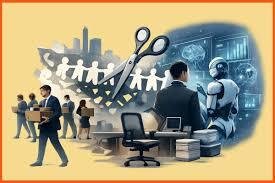
CEO Jack Dorsey — co-founder of Block and former CEO of Twitter — made it clear that while the company remained profitable, AI had essentially reshaped the company’s staffing needs. Tasks like transaction monitoring, reconciliation, fraud detection, customer queries, and even aspects of product design are now increasingly supported by algorithmic systems that need fewer human operators.
For instance, instead of hundreds of call centre staff fielding support queries, AI-powered chatbots and automated troubleshooting systems can instantly resolve common issues at scale. Similarly, machine learning systems can analyze patterns in financial data far more quickly — and often with fewer errors — than human teams previously could. These efficiency gains, Block argues, are central to remaining competitive within a fast-moving digital economy.
The Human Cost
Despite the strategic rationale, the layoffs have had a significant human impact. Thousands of workers — from software engineers and data analysts to customer support agents — suddenly faced unemployment or forced career transitions.
For many affected employees, AI was not a distant concept but a personal reality reshaping their livelihood. Social media erupted with stories of former Block workers describing years of service, followed by sudden job loss as automated systems replaced roles they once performed. Some described uncertainty about how to adapt their skills for an AI-driven future; others expressed frustration that technological upgrades were making them obsolete.
What Block’s Move Says About Broader Tech Trends
Block’s AI-related layoffs are not an isolated phenomenon. They reflect a wider shift in how businesses are approaching labor and automation:
1. AI Is Not Just Productivity — It’s Labor Replacement
While AI has long been understood as a productivity tool, companies are increasingly deploying it to directly replace human roles — especially tasks that are repetitive, predictable, or structured.
2. Investors Reward Cost-Saving Automation
Block’s stock experienced an uptick after the announcement, signalling that financial markets are rewarding companies that cut costs via automation, even when those cuts involve labour reductions.
3. Technologies Are Outpacing Workforce Preparedness
Many workers lack the specific skills that are now in demand — such as machine learning engineering, AI integration, or automation oversight — leaving a growing skills gap in the labour market.
Why This Isn’t Just About Block
Block’s decision resonates because the company operates in financial technology, a sector at the forefront of both digital transformation and AI deployment. But similar dynamics are playing out in other industries:
- Customer service centres increasingly use conversational AI instead of human agents.
- Manufacturing plants rely on robotics and automated quality control systems.
- Media and content creation use generative AI tools for production tasks.
- Data analytics and legal work are assisted or replaced by AI that can process information at machine speed.
In each case, the adoption of AI is shifting which jobs exist, and who performs them.

Adapting to an AI-Centric Job Market
Experts say the rise of AI doesn’t necessarily spell doom for employment overall — but it does demand a shift in how workers prepare for the future of work:
- Reskilling and Upskilling: Workers need training in AI-related skills — from AI tool management to data science and digital literacy.
- Lifelong Learning: Career paths are no longer linear. Continuous learning becomes essential across industries.
- Policy Support: Governments and institutions may need to expand support for workforce transitions through education programs, safety nets, and incentives.
Final Thoughts: Disruption and Opportunity
Block, Inc.’s AI-driven job cuts are a vivid example of how rapidly artificial intelligence is reshaping labour markets. While automation offers efficiency gains and cost savings, it also poses difficult questions about workforce preparedness, economic stability, and human dignity in an era of rapid technological change.
Ultimately, AI will continue to transform industries — some jobs will disappear, others will evolve, and entirely new roles will emerge. The key challenge for workers, businesses, and policymakers alike is not to resist automation but to navigate the transition wisely, ensuring that technological progress is paired with inclusive opportunities and meaningful human roles in the economy of tomorrow.