


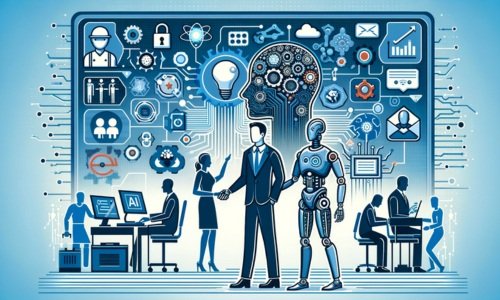
Artificial Intelligence (AI) is transforming the way we live and work at an unprecedented pace. From automated customer service chatbots to advanced data analytics systems, AI is no longer a distant concept — it is deeply embedded in modern workplaces. As businesses adopt smarter technologies, one pressing question continues to dominate global conversations: What does AI mean for the future of jobs?
The answer is not simple. AI is both a disruptor and a creator of opportunities. Understanding its impact requires looking beyond headlines and examining how work itself is evolving.
The Shift from Job Replacement to Task Transformation
One of the biggest fears surrounding AI is job loss. Automation has already replaced certain routine and repetitive roles, especially in industries like manufacturing, logistics, and administrative support. Tasks such as data entry, scheduling, and basic customer inquiries are increasingly handled by intelligent systems.
However, experts emphasize an important distinction: AI is more likely to replace tasks, not entire professions. Most jobs consist of multiple responsibilities. While AI may automate repetitive components, humans remain essential for complex decision-making, creativity, and emotional intelligence.
For example, in healthcare, AI can analyze medical images faster than humans, but doctors still interpret results, communicate with patients, and make final decisions. Similarly, in finance, algorithms process data rapidly, yet human oversight ensures strategic planning and ethical accountability.
The future is less about humans versus machines and more about collaboration between the two.
Industries Most Affected by AI
AI’s impact varies across sectors. Some industries are experiencing rapid automation, while others are seeing enhancement rather than displacement.
Highly affected sectors include:
- Manufacturing and production
- Transportation and logistics
- Retail and customer service
- Administrative support
At the same time, AI is revolutionizing industries such as:
- Healthcare
- Education
- Marketing
- Software development
- Green energy
In many of these areas, AI acts as a productivity booster rather than a replacement. It helps professionals work faster, analyze data more accurately, and focus on strategic tasks instead of repetitive ones.
The Rise of New Careers
While some jobs decline, entirely new roles are emerging. The AI economy is creating demand for:
- Machine learning engineers
- Data scientists
- AI ethics specialists
- Automation consultants
- Human-AI interaction designers
- Cybersecurity analysts
Beyond technical roles, AI also fuels growth in creative and strategic careers. Content creators, digital marketers, and innovation strategists are using AI tools to enhance their output rather than compete against them.
Historically, technological revolutions — from the Industrial Revolution to the rise of the internet — have eliminated certain roles while generating new industries. AI appears to be following a similar pattern.
Skills That Will Matter Most
As AI reshapes the workforce, certain skills are becoming increasingly valuable.
1. Critical Thinking and Problem Solving
AI can analyze data, but it cannot fully understand context, ethics, or human nuance.
2. Emotional Intelligence
Communication, empathy, and leadership remain deeply human strengths.
3. Creativity
While AI can generate content, humans provide originality, storytelling, and cultural relevance.
4. Technical Literacy
Workers do not need to become AI engineers, but understanding digital tools and data will be essential across most industries.
Continuous learning is no longer optional — it is necessary for career resilience.
Challenges and Concerns
Despite the opportunities, AI presents real challenges. Automation may widen income inequality if high-skill workers benefit more than low-skill workers. There is also concern about bias in AI systems and the ethical implications of automated decision-making.

Governments and organizations must invest in reskilling programs, ethical AI development, and policies that support workers during transitions. Preparing the workforce for change is critical to ensuring AI benefits society as a whole.
The Future of Work: Adaptation and Collaboration
Looking ahead, the workplace will likely become more hybrid and technology-driven. AI will handle data-heavy, repetitive tasks, allowing humans to focus on innovation, relationship-building, and strategy.
Rather than eliminating work, AI is redefining it. Jobs may look different, skills may evolve, and industries may transform — but human contribution remains central.
The future of work will belong to those who adapt, learn continuously, and embrace collaboration with technology. In an AI-powered world, success will not come from competing with machines, but from leveraging them to amplify human potential.